
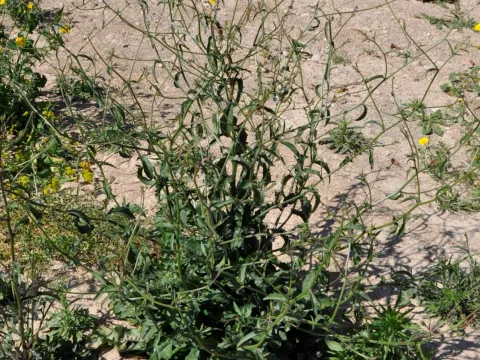
Picris rhagadioloides
Picris rhagadioloides
Picris rhagadioloides is an annual herbaceous plant belonging to the Asteraceae family. Its life cycle is characterized by rapid growth in the early spring months.
What the section contains
Picris rhagadioloides
Sowing should take place when soil temperatures consistently reach 10 degrees Celsius. This ensures optimal germination rates and early establishment of the root system.
The seeds possess high dormancy breaking potential, allowing them to sprout successfully in various environmental conditions. Depth of sowing should be strictly maintained at 3-5 cm.
In field conditions, the plant displays high competitive ability, often outperforming other crops if sown in high densities. Proper spacing is essential for high biomass production.
The total growing season extends for approximately 100 days. Early spring sowing is recommended to maximize yield potential before the onset of extreme summer heat.
The plant thrives in well-drained, nutrient-rich soils. Light sandy loams are ideal for deep root penetration and healthy development of the vegetative biomass.
Picris rhagadioloides requires full sunlight exposure. Any shading from taller crops significantly reduces the photosynthetic efficiency and overall vigor of the plant.
Moderate irrigation is beneficial during the vegetative stage, but the plant shows impressive tolerance to low water availability once established. Drainage is crucial to avoid root rot.
Soil pH levels between 6.5 and 7.5 are optimal. The plant is adaptable but performs best in slightly alkaline environments with good aeration and organic matter content.
Regular weeding and soil aeration in the early stages are mandatory to ensure that the young seedlings are not choked by faster-growing competitor species.
Common diseases affecting the plant include powdery mildew and fungal rust, which thrive under high humidity and poor air circulation within the field canopy.
Pest threats include various species of aphids and beetles that feed on the soft tissues of the leaves and flowering buds, reducing seed set quality.
Soil-borne pathogens can cause root decay, particularly in waterlogged conditions. Preventive fungicide treatments are effective if applied during the early infection stages.
- Powdery mildew
- Leaf rust
- Aphids
- Leaf beetles
- Root rot
Integrated Pest Management (IPM) strategies, including biological control agents, are recommended for maintaining healthy populations in controlled research environments.
Harvesting is ideally conducted during the peak flowering phase to ensure the maximum concentration of bioactive compounds within the harvested plant material.
Mechanical harvesting via mowing is the most efficient method for large areas. The harvested material should be processed immediately to prevent degradation.
Seed harvesting requires careful timing to prevent shattering, as seeds are easily dispersed by wind. Early morning harvest can help minimize seed loss during mechanical operations.
Post-harvest drying is essential to stabilize the product. Using forced-air drying systems ensures consistent moisture removal and prevents fungal development in storage.
Final storage should be in a cool, dry environment with low relative humidity to maintain the integrity of the plant tissues for long-term use.