
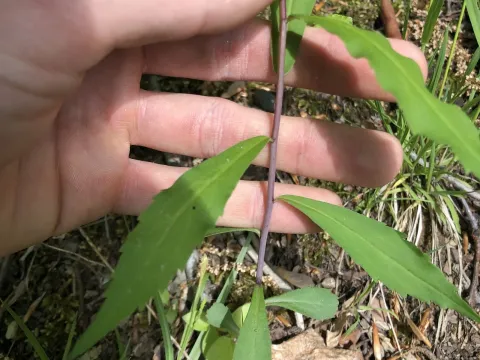
Blue-stemmed goldenrod
Solidago caesia
Blue-stemmed goldenrod (Solidago caesia) is typically propagated via seeds that require a period of cold stratification to break dormancy and ensure successful germination.
What the section contains
Blue-stemmed goldenrod
Sowing in autumn is highly recommended, as the seeds naturally experience the necessary cycle of winter cold and spring warmth while remaining in the garden soil.
If spring planting is preferred, seeds must be kept in a refrigerator for at least 4 to 6 weeks in a damp substrate to replicate seasonal cold conditions.
Vegetative propagation by dividing mature clumps is also an effective and faster method for ensuring the plant matures correctly in its first growing season.
When sowing, cover seeds very lightly with soil or compost, as they require some light exposure to germinate effectively and should not be buried too deep.
Solidago caesia, belonging to the Asteraceae family, is native to the forests and woodlands of eastern North America, adapted specifically to shaded environments.
Unlike many other goldenrod species that thrive in sunny meadows, this variety prefers partial to full shade, mimicking its natural habitat beneath a forest canopy.
The plant grows best in moist, well-draining, slightly acidic soils that are rich in organic matter, such as leaf mold or compost amendments.
It is a hardy perennial, capable of withstanding the temperature fluctuations typical of continental climates, making it a reliable choice for cold-winter regions.
Proper airflow is critical for this species; planting too densely in a stagnant humid environment can reduce the overall health and vigor of the plant.
Powdery mildew is the most prevalent disease for blue-stemmed goldenrod, appearing as a white, dusty layer on leaves when air circulation is inadequate.
Rust fungi may also occur in areas with prolonged wet weather, characterized by brownish or orange spots that can lead to premature leaf drop if untreated.
Insect pests such as aphids and lace bugs may colonize the foliage during the growing season, necessitating monitoring and early intervention to prevent damage.
The best defense against these threats is maintaining adequate spacing between plants and ensuring that the soil is not overly saturated for long periods.
In case of severe infestations or infections, the use of organic or synthetic pesticides and fungicides should be managed according to standard gardening practices.