
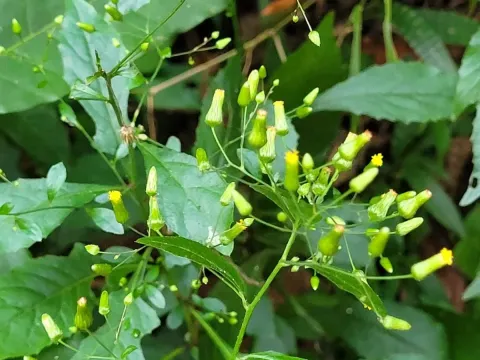
Blumea
Blumea
The planting of Blumea balsamifera is typically initiated in the spring when soil temperatures reach 20–25 degrees Celsius. Seeds are sown in specialized nurseries or seed trays, maintaining consistent moisture levels for optimal germination.
What the section contains

Blumea
In tropical environments, vegetative propagation through stem cuttings or rhizome division is also common. For commercial cultivation, direct seeding or transplanting nursery-raised seedlings is preferred to ensure uniform plant density across the field.
Seed depth is critical because Blumea seeds are extremely small. They should be lightly covered with a fine layer of moist substrate or pressed into the soil to ensure proper contact without burial, which could inhibit germination.
The ideal time for transplanting into open fields is immediately after the rainy season. Maintaining a planting distance of 40–50 cm allows for robust development of the foliage and optimal exposure to sunlight.
Pre-sowing treatment, such as soaking seeds in growth promoters, can significantly improve germination rates, especially in non-tropical climates where nursery conditions must be carefully controlled.
Blumea is a member of the Asteraceae family and is a tropical plant that thrives in temperatures ranging from 25 to 30 degrees Celsius. It is highly sensitive to cold and requires a frost-free environment to grow effectively.
The crop requires well-drained, fertile soil with a neutral to slightly acidic pH. Waterlogging is detrimental to the root system and often leads to root rot, so proper field drainage is an essential prerequisite for cultivation.
Blumea is a light-demanding plant and should be grown in open, sunny areas. Abundant sunlight is vital for the biosynthesis of essential oils, particularly borneol, which is stored in the glandular hairs of the leaves.
During the peak growing season, regular irrigation is necessary to support high biomass production. However, growers must balance this with good airflow to prevent humidity-related fungal issues that can arise in dense plantings.
Organic fertilization is highly recommended before planting to build soil fertility. As a leafy crop, Blumea is particularly responsive to nitrogen and potassium, which support rapid vegetative development and essential oil accumulation.
Yield in Blumea is measured by the total dry weight of the harvested leaves and the concentration of extractable essential oil. Productivity is heavily influenced by the agricultural management practices and the regional climate.
Peak biomass and oil content are typically reached during the flowering stage. Under optimal conditions, a well-managed plantation can support multiple harvests within a single growing season.
Factors that enhance yield include timely weeding and soil aeration. Blumea responds positively to supplementary foliar or soil fertilizers, which can increase the harvest volume by up to 20 percent compared to unmanaged crops.
Planting density is a key driver of yield; excessive spacing results in inefficient land use, while overcrowding limits the sunlight reaching the lower leaves, reducing the total quality of the harvest.
Processing must occur immediately after harvest to maximize the yield of essential oil. Delays in processing lead to the evaporation of volatile components, resulting in a significant reduction in oil quality and quantity.
The primary pests affecting Blumea are sap-sucking insects like aphids and spider mites, which thrive during dry spells. These pests damage leaves and can significantly reduce the secondary metabolite content of the plant.
Fungal diseases, such as leaf spot and root rot, are common threats, particularly when soil drainage is poor or plant density is too high, leading to stagnant, humid micro-climates.
Integrated Pest Management (IPM) is recommended, focusing on crop rotation, sanitation, and the selection of disease-resistant varieties where possible to minimize chemical reliance.
- Application of bio-fungicides to control early-stage fungal outbreaks.
- Regular field scouting to identify pest pressure before it reaches economic thresholds.
- Mulching to minimize soil-borne pathogens from splashing onto the lower leaves.
- Maintaining proper row spacing to encourage ventilation.
Chemical intervention should be kept to a minimum, especially in crops destined for the pharmaceutical or cosmetic industries, due to strict safety and residue regulations.
The harvest of Blumea is performed by cutting the aerial portions of the plant. A residual stem height of 10–15 cm should be left to encourage rapid regrowth and ensure longevity for future harvests.
The best time for harvesting is during the early morning hours, once the dew has evaporated but before the mid-day heat. This practice helps preserve the volatile essential oils present in the foliage.
Post-harvest handling requires quick transportation to drying facilities or distillation units. In commercial operations, controlled-temperature drying (not exceeding 40 degrees Celsius) is used to prevent the loss of active ingredients.
Distillation for essential oil extraction is most efficient when conducted immediately after the cut. Storage for longer than 24 hours often results in a lower oil yield due to natural oxidation and volatilization.
After the harvest, clearing crop residues and lightly cultivating the soil around the remaining stumps can improve aeration and facilitate the plant's recovery for the next growth cycle.