
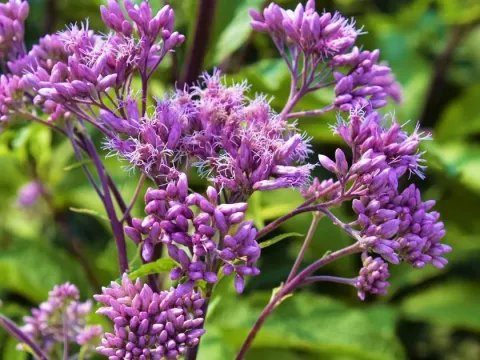
Blue mistflower
Eupatorium caelestinum
Blue mistflower (Eupatorium caelestinum) is typically propagated via seeds sown indoors during late winter or early spring to ensure a long growing season.
What the section contains
Blue mistflower
Seeds require a period of cold stratification for about 3 to 4 weeks to break dormancy and improve germination rates before being sown into a light, nutrient-rich substrate.
Once the seedlings have developed two sets of true leaves, they should be hardened off and eventually transplanted into the garden bed after the threat of frost has passed.
Vegetative propagation is also highly effective; dividing mature rhizomes in early spring is the preferred method for maintaining the characteristics of established varieties.
For large-scale cultivation, maintaining a consistent planting density is crucial to ensure each plant has enough space to spread while forming a dense, uniform cover.
This species thrives in full sun but tolerates partial shade; however, full exposure is recommended for optimal blooming and vibrant blue coloration of the flowers.
Blue mistflower performs best in moist, rich soils. It is well-suited for areas with consistent moisture levels and does not tolerate prolonged drought conditions.
The plant belongs to the Asteraceae family and appreciates soils enriched with organic matter, such as compost or well-rotted manure, applied during the planting phase.
Regular watering is essential, especially during the summer heat, to prevent the foliage from wilting and to support the continuous development of flower clusters.
While the plant is quite hardy, applying a layer of mulch in the autumn can protect the crown from freezing temperatures, especially in regions with erratic snow cover.
While blue mistflower is primarily grown for its ornamental value, its yield of nectar and pollen makes it an exceptional plant for supporting local pollinator populations.
In landscape use, one successful plant can spread vigorously through rhizomes, creating a dense mat that produces a high volume of flowers per square meter by late summer.
Effective management and consistent moisture can significantly increase the number of floral stems produced by each colony over the course of the growing season.
Yield in terms of biodiversity impact is high, as the late-season blossoms provide a crucial food source for bees, butterflies, and other beneficial insects before winter.
Professional growers often harvest cuttings for floral arrangements, as the airy clusters provide excellent structure and a soft blue hue to bouquets.
Powdery mildew is the most common issue encountered when plants are grown in areas with poor air circulation or consistently humid, stagnant conditions.
Root rot can occur in heavy, clay-based soils that lack proper drainage, highlighting the need for site selection that prevents water from pooling around the roots.
Aphids can be problematic during periods of rapid growth, often congregating on the tender new shoots and underside of leaves, necessitating monitoring.
Spider mites may appear in dry, hot weather, leading to discolored, mottled foliage if left untreated for extended periods of time.
Implementing a proper pruning schedule, which includes removing dead or diseased plant material, is the best cultural practice to minimize pest and disease pressure.