
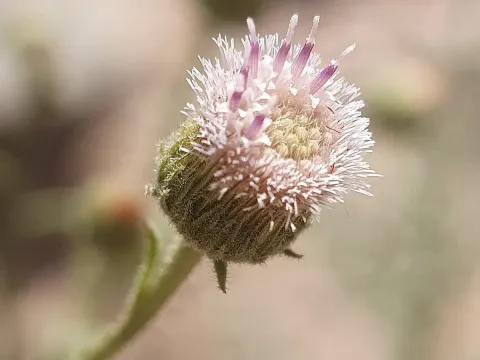
Blumea bovei
Blumea bovei
Blumea bovei is an herbaceous plant belonging to the Asteraceae family. Sowing is typically carried out in spring when soil temperatures consistently favor germination. This species requires a well-prepared seedbed, free from debris and weeds, to ensure optimal establishment.
What the section contains
Blumea bovei
Due to the small size of the seeds, they should be sown at a shallow depth. Precision sowing techniques are recommended to maintain appropriate plant density, which prevents overcrowding and competition for sunlight and nutrients.
Farmers often utilize specialized seeding equipment to maintain uniform spacing between rows. This arrangement facilitates subsequent maintenance tasks, such as weed control and mechanical aeration, which are vital during the early vegetative stage.
Pre-planting soil enrichment with balanced organic fertilizers can significantly boost initial growth. Providing a nutrient-rich environment encourages the development of a robust root system, essential for the plant's long-term health.
After emergence, monitoring the density of the seedlings is necessary. If sowing rates were too high, thinning might be required to ensure that each plant has enough space to reach its full productive potential.
This crop thrives in sunny, well-lit environments. Exposure to full sunlight is crucial for the biosynthesis of secondary metabolites, including the essential oils for which the plant is valued in various industrial applications.
The soil should be fertile, well-drained, and have a neutral or slightly acidic pH level. Waterlogging is detrimental to the root system, so proper field drainage must be implemented, particularly in areas with heavy or clay-based soils.
Climate is a significant factor, as Blumea bovei is native to regions with warmer temperatures. It is sensitive to frost and thrives best in conditions where daytime temperatures remain between 20 and 30 degrees Celsius throughout the growing season.
Irrigation management is vital, especially during the peak growth period. The plants require consistent moisture but must be protected from excessive saturation, which could trigger root diseases or inhibit metabolic functions.
Regular cultivation of the soil between rows helps to maintain aeration and eliminates weed competition. This maintenance practice allows the crop to fully utilize available water and soil nutrients, promoting healthier, more vigorous plants.
Yield for Blumea bovei is measured primarily by the dry weight of harvested biomass. Producers aim to maximize foliage growth, as this contains the majority of the active compounds utilized in the cosmetic and medicinal industries.
The efficiency of essential oil extraction depends heavily on the crop's development phase during harvest. Higher yields are consistently achieved through careful nutrient management and consistent water availability throughout the plant's life cycle.
Modern farming practices, such as precision fertigation, are becoming increasingly common to boost output. These methods allow farmers to deliver targeted nutrition directly to the root zone, significantly increasing total harvestable biomass.
Environmental factors, such as day length and seasonal temperature variations, influence the oil content within the plant tissue. Understanding these variables allows producers to time harvests for maximum financial return.
Infrastructure, including on-site drying facilities and processing units, plays a crucial role in overall yield. Minimizing the time between harvest and processing ensures that the highest concentration of essential oils is preserved.
The primary threats to this crop include various fungal diseases that thrive in high-humidity conditions. Powdery mildew and leaf spot can reduce foliage quality, making early detection and intervention essential for sustaining crop health.
Pests such as aphids and spider mites are frequent threats. These insects feed on the sap, causing leaf deformation and weakening the plant's overall vitality, which in turn leads to lower quality harvests.
Integrated pest management (IPM) strategies, including crop rotation, are the preferred method for dealing with these issues. Avoiding land previously occupied by susceptible Asteraceae species helps break the lifecycle of potential pathogens.
The use of chemical interventions should be kept to an absolute minimum to preserve the purity of the medicinal raw materials. Biological controls are generally more appropriate and safer for this type of botanical production.
Field monitoring is a mandatory practice for successful cultivation. Removing and isolating affected plants early helps prevent the spread of diseases or pest outbreaks across the entire field, saving the integrity of the harvest.
Harvesting is ideally conducted during the plant's peak flowering stage. This is the period when the concentration of essential oils and other valuable compounds in the stems and leaves is at its highest.
The harvesting process involves cutting the above-ground biomass at a specific height. Using clean, sharp tools or mechanized harvesters ensures minimal damage to the plant tissue and prepares it for immediate transport.
Drying must take place in a shaded, well-ventilated area. Direct sunlight causes the evaporation of volatile essential oils, which can significantly decrease the market value of the dried raw material.
Post-harvest processing involves cleaning the biomass to remove impurities and sorting it for quality control. Proper packaging is then required to prevent moisture accumulation and protect the product from light degradation.
Logistics and storage are vital components of the post-harvest chain. Maintaining the integrity of the raw material through controlled storage conditions ensures that the product remains suitable for industrial extraction or market sale.