
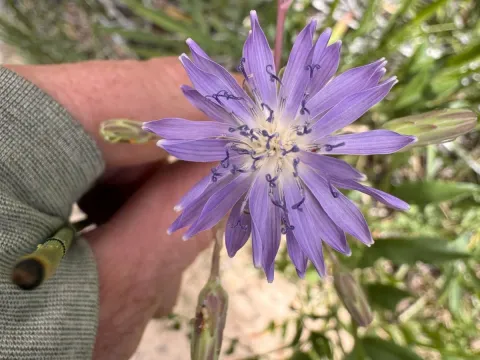
Blue lettuce
Lactuca pulchella
Blue lettuce (Lactuca pulchella) is a perennial herbaceous plant belonging to the Asteraceae family. In agronomic practice, it is widely recognized as a persistent, deep-rooted weed that presents significant challenges for crop production.
What the section contains
Blue lettuce
Native to parts of North America and Eurasia, the plant has adapted to diverse environments, ranging from semi-arid plains to saline soils and abandoned fields. Its success as a weed is largely due to its high phenotypic plasticity.
The species features a complex root system capable of deep penetration. This vertical and horizontal root structure makes mechanical cultivation difficult, as fragments left in the soil can regenerate into new, vigorous shoots.
Blue lettuce requires full sun exposure for optimal growth. It is relatively indifferent to soil type, provided there is minimal water content, but it shows a distinct preference for disturbed, nutrient-rich agricultural soils where it can outcompete crops.
Management requires an integrated approach. Cultural practices such as intensive stubble cultivation, combined with strategic herbicide application during the rosette stage, are necessary to deplete the root reserves and prevent further spread.
Lactuca pulchella is susceptible to various fungal pathogens, with powdery mildew being the most prevalent. This fungus thrives on the leaf surfaces, causing significant reduction in plant vitality and reproductive capacity.
Insect pests, particularly aphids, frequently colonize the plants. By feeding on phloem sap, they stunt growth and can transmit various mosaic viruses, which may subsequently affect neighboring cultivated crops.
Rust diseases are also common, characterized by reddish-brown pustules on the foliage. These infections typically peak during periods of high humidity, putting the entire plant population at risk of premature senescence.
Sanitation is a critical factor in mitigating these threats. Removing host plants from field margins prevents the buildup of pest populations and the accumulation of infectious fungal spores throughout the growing season.
Biological control agents, including predatory beetles and wasps, can help manage insect populations, though chemical intervention remains the standard method for large-scale infestations in arable landscapes.