
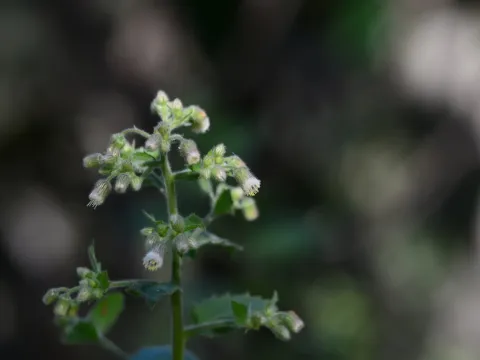
Blumea axillaris
Blumea axillaris
Blumea axillaris is a perennial herbaceous plant belonging to the Asteraceae family. It is recognized for its significant aromatic properties and its role in traditional and modern medicinal applications as a source of essential oils.
What the section contains
Blumea axillaris
The sowing process requires well-drained, fertile soil. Seeds are typically sown in prepared seedbeds during the spring season to ensure that seedlings have sufficient time to establish strong root systems before the onset of extreme heat or monsoon rains.
For large-scale cultivation, using healthy seedlings rather than direct seeding is recommended. This method ensures uniform growth and allows for better spacing management across the plantation, which is crucial for maximizing yield.
Seedlings should be transplanted to the main field when they have developed 4 to 6 true leaves. The spacing should be managed to prevent overcrowding, typically maintaining a distance of 40-50 centimeters between individual plants.
Initial establishment requires consistent moisture. Once the plants have taken root, they become quite hardy, though weed control remains essential during the early weeks to minimize competition for nutrients.
Blumea axillaris thrives in sunny conditions and requires significant exposure to light to optimize the synthesis of secondary metabolites, including essential oils. Shaded locations are generally unsuitable for commercial production.
The crop prefers sandy loam or light soil types with good drainage. While it can adapt to various soil pH levels, a neutral to slightly acidic environment is ideal for optimal nutrient uptake.
Water management is critical. Although the plant is resilient, it requires steady moisture during the vegetative growth phase. Excessive water accumulation in the root zone must be avoided to prevent common soil-borne issues.
Balanced fertilization is necessary to support biomass production. Nitrogen-rich fertilizers are beneficial during the early growth stages, while potassium and phosphorus applications are recommended as the plant approaches the budding stage.
Regular maintenance of the plantation, including loosening the soil between rows, helps improve soil aeration and prevents crust formation, which is vital for the health of the plant's root system.
The primary economic use of Blumea axillaris is the extraction of essential oils, particularly rich in borneol. These oils are in high demand within the pharmaceutical and fragrance industries for their therapeutic properties.
In addition to essential oil production, the foliage is used in traditional medicine as an antiseptic, anti-inflammatory, and febrifuge agent. It is often prepared as decoctions or poultices for skin and respiratory ailments.
The biomass of the plant is considered a source of bioactive compounds. Given the global interest in natural products, the cultivation of Blumea axillaris presents a viable business opportunity for farmers specializing in medicinal herbs.
Yield efficiency is highly dependent on timely harvesting and post-harvest handling. Efficient distillation processes are essential to maximize the recovery of volatile compounds from the harvested green material.
Ongoing research into the chemical profiles of various cultivars suggests that yield can be further optimized through selective breeding and improved agronomic practices, ensuring a steady supply for medical manufacturers.
The most significant threats to Blumea axillaris include root rot and fungal infections, which are typically exacerbated by poorly drained soil or stagnant water. Good ventilation between plants is the best preventative measure.
Leaf-chewing insects and aphids are common pests that can hinder growth. While damage may be localized, large-scale infestations can cause substantial stress to the plants, potentially reducing the quality of the essential oil extracted.
Integrated pest management (IPM) strategies, including the use of biological control agents, are preferred over synthetic pesticides to maintain the quality and purity required for medicinal applications.
Sanitation practices such as removing infected plant parts and maintaining clean field boundaries help manage the spread of pests and diseases. Regular monitoring of the field allows for early intervention before outbreaks occur.
If chemical intervention is unavoidable, it must be applied with strict adherence to pre-harvest intervals to prevent residues in the final product, which is especially important for herb-based medicinal goods.
Harvesting is typically carried out during the peak flowering phase. This timing is critical, as it coincides with the highest concentration of volatile oils and medicinal compounds within the plant's tissues.
The harvesting process involves cutting the stems 10 to 15 centimeters above the ground. This method protects the root crown and encourages the plant to regenerate, allowing for multiple harvests within a single growing season.
Post-harvest handling must be rapid to avoid the loss of volatile essential oils. Harvested material should be kept in cool, shaded, and well-ventilated conditions during transport to the processing facility.
Drying should be performed in covered areas away from direct sunlight. Direct UV exposure can degrade the delicate chemical composition of the plant, negatively impacting the quality and value of the final oil.
Stored dry material should be placed in moisture-proof and light-resistant containers. Maintaining a cool, dark environment ensures that the medicinal and aromatic characteristics are preserved for an extended period.