
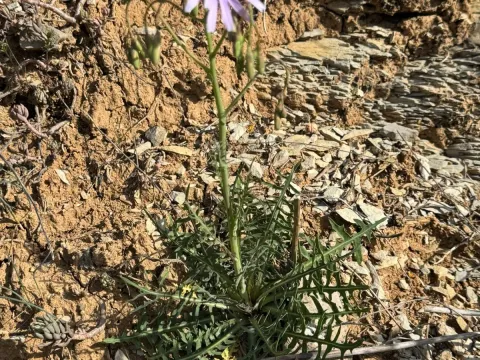
Blue lettuce
Lactuca perennis
Sowing of Blue lettuce (Lactuca perennis) is typically carried out in early spring when the soil temperature consistently reaches 10 degrees Celsius.
What the section contains
Blue lettuce
Winter sowing is also a viable option in temperate climates, allowing seeds to stratify naturally and germinate as soon as the spring thaw begins.
Seeds should be planted at a shallow depth of approximately 1 centimeter, as they require a small amount of light and consistent moisture for successful germination.
Space the plants adequately to ensure that individual rosettes have enough room to expand, which is critical for the long-term health of perennial stands.
Thinning is recommended shortly after emergence if the seedlings are too crowded, ensuring that the strongest plants occupy the designated spacing.
Blue lettuce is a hardy herbaceous perennial plant belonging to the Asteraceae family, noted for its distinct blue-violet flowers and deep root system.
It thrives in well-drained, slightly alkaline to neutral soil conditions and is relatively adaptable to various types of substrates, including rocky outcrops.
The plant requires full sun exposure to flourish, as its physiological processes are optimized by high light intensity throughout the growing season.
Due to its native origins in arid or mountainous regions, it demonstrates notable drought tolerance once established in the garden or field.
Minimal fertilization is required, as excessive nitrogen can lead to overly rapid leaf growth and decreased plant resilience against environmental stress.
Pathogenic fungi, such as powdery mildew, are the primary biological threats to the species, particularly during periods of high humidity and poor airflow.
Root rot can occur if the soil remains waterlogged for extended periods, making proper drainage the most important preventive measure for long-term survival.
Insects like aphids often target the tender shoots, potentially stunting growth and acting as vectors for various plant viruses that affect the Asteraceae family.
Gastropods, including slugs and snails, represent a constant danger to young foliage, requiring monitoring during cool, damp weather conditions.
Maintaining a clean cultivation area by removing weeds and plant debris helps reduce the habitat available for pests and prevents disease outbreaks.