
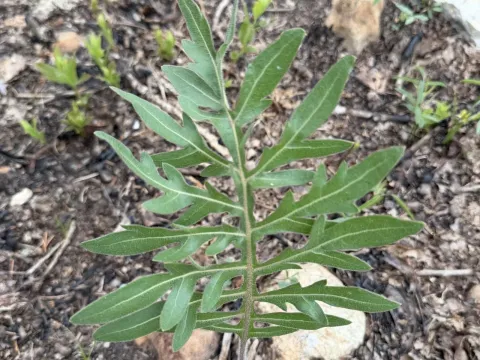
Compass plant
Silphium laciniatum
Compass plant is best sown in early spring as soon as the soil warms up to 6–8°C. The seeds require stratification, so it is optimal to sow them in late autumn or use pre-chilled seeds to ensure uniform germination.
What the section contains
Compass plant
Planting is usually done in rows spaced 45 to 70 centimeters apart, which simplifies weed management and field maintenance. The sowing depth should be 2–3 centimeters in heavier soils and 3–4 centimeters in lighter, sandy soils.
During the first year, the crop develops slowly, focusing mainly on establishing a robust basal rosette of leaves and a strong root system. It is crucial to manage weed competition effectively during this early establishment phase, as the young plants are sensitive to encroachment.
For establishing productive commercial fields, a seeding rate of approximately 8–12 kg per hectare is recommended. Maintaining proper plant density helps prevent weeds from occupying the gaps between rows in subsequent years.
Once established, the plant becomes highly resilient and competitive, effectively occupying the land for 10–15 years. Since the plant is long-lived, regular reseeding of the plantation is not required.
Compass plant (Silphium laciniatum) is a tall perennial herb belonging to the Asteraceae family. It is known for its exceptional winter hardiness and ability to withstand significant temperature fluctuations, making it suitable for various climatic conditions.
The crop prefers deep, fertile loam or sandy loam soils with a neutral pH. While it adapts well to different moisture levels, it produces maximum biomass on sites with adequate water availability and good drainage.
The plant features a deep taproot that penetrates far into the soil, allowing it to access moisture and nutrients from deeper horizons. This trait makes it highly productive even during periods of drought when other forage grasses typically go dormant.
Compass plant responds well to organic and mineral fertilizers, particularly nitrogen applications at the beginning of the spring growth season. However, nitrogen levels should be managed to avoid lodging of the tall stems during the flowering stage.
Originating from the North American prairies, the plant thrives in open, sunny locations. Cultivation should avoid heavily shaded areas, as light is essential for optimal photosynthesis and overall biomass yield.
Compass plant is valued for its consistently high biomass yields, which can range from 50 to 80 tons per hectare depending on management practices. This high productive potential remains stable over many years of field use.
The primary use of the crop is silage production, as its nutritional profile is similar to corn silage. The high sugar content in the biomass facilitates high-quality ensiling, resulting in a palatable and nutritious feed for livestock.
Increasingly, the plant is viewed as a valuable biomass source for biogas production. Due to high methane output per hectare, it is considered one of the best energy crops for replacing traditional monocultures like maize.
In addition to its role in forage and energy sectors, the Compass plant is an excellent honey producer. Its long flowering period in mid-to-late summer provides a stable nectar source for pollinators, enhancing the economic value of the farm.
The biomass is rich in protein and minerals, making it a valuable feed component for cattle. The stability of its annual yields, even under unfavorable weather conditions, contributes to food security and farm-level reliability.
Compass plant possesses strong natural resistance, making it resilient to most common agricultural crop diseases. On well-drained sites, the risk of fungal infections is minimal.
In rare instances, excessive waterlogging may lead to root rot; therefore, selecting sites with good drainage is essential to prevent water stagnation. Proper crop rotation and optimal stand density further mitigate these biological risks.
Pests such as aphids or certain leaf-eating insects may occasionally appear, but their populations rarely reach an economic threshold of damage. Natural predators present in the vicinity of the fields often maintain these populations at safe levels.
The greatest threat to new plantations is weed competition during the first year of growth. Timely mechanical weeding between rows and the use of mulching are effective strategies to protect young seedlings from being overwhelmed.
Overall, Compass plant does not require intensive chemical pesticide applications, making it a suitable candidate for sustainable and organic-leaning agricultural systems, which also reduces long-term operational costs.
Harvesting should be conducted at the onset of flowering when the nutrient content in the stems and leaves is at its peak. Depending on the region, the first cut typically occurs in June or July, ensuring high-quality silage production.
Standard forage harvesters should be calibrated to a cutting height of at least 10–12 centimeters from the soil surface. This height ensures the crown remains intact and allows the plant to regenerate rapidly after harvest.
If two cuts per season are planned, the second cut should be taken in late August or September, well before the first killing frosts. This timing provides the plant with sufficient time to store nutrients in the root system before winter dormancy.
Harvesting for energy purposes can extend into the autumn, as lower moisture content in the biomass can simplify logistics and facilitate processing in biogas plants.
The field requires minimal post-harvest care. The plant shows strong regrowth, and leftover crop residues help improve soil structure and organic matter content over time.