
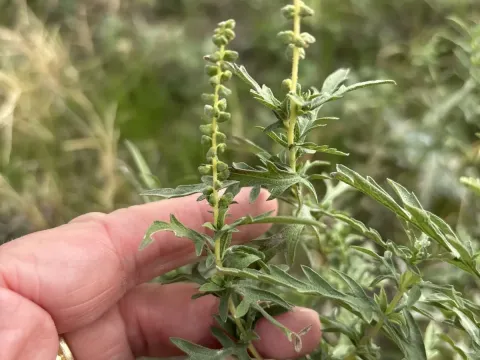
Common Ragweed (Franseria)
Franseria
Franseria, a genus within the Asteraceae family now largely classified under the genus Ambrosia, is not an agricultural crop. It is universally recognized as a major invasive quarantine weed that causes significant disruption in agricultural productivity across the globe.
What the section contains
Common Ragweed (Franseria)
Originating in North America, this species has successfully colonized diverse temperate regions. It exhibits high adaptability to various soil types, ranging from nutrient-poor sandy soils to fertile agricultural lands, where it aggressively competes for space, water, and nutrients.
Botanically, it is a robust annual plant featuring a deep taproot system and a highly branched, leafy structure. These characteristics allow the plant to thrive in harsh environments and recover rapidly after partial mechanical clearing or environmental stress.
The plant demonstrates extreme resilience to climate variations, requiring only a sufficient growing season to complete its life cycle. It is particularly prevalent in disturbed sites, roadsides, and cultivated fields where competition from existing vegetation is minimal.
There is no economic utility for this plant in farming. Instead, it is classified as a harmful organism, and agricultural policies worldwide focus on its total eradication to protect crop yields and public health from its highly allergenic pollen.
The plant maintains high resistance to many conventional pests and pathogens, which contributes to its invasive status. It is rarely suppressed by the same natural mechanisms that regulate the growth of beneficial native plant species or traditional crops.
Natural enemies, such as specific leaf beetles, have been studied for biological control but rarely provide the rapid control required in high-intensity farming environments. Therefore, integrated pest management remains the primary defense strategy.
The principal threat is its negative impact on crop production through resource competition and the contamination of harvested seeds. Its presence can lead to total yield losses if not addressed during the early stages of the growing season.
Control strategies involve a combination of chemical herbicide application and rigorous mechanical soil management. Farmers are advised to maintain strict hygiene protocols for farm machinery to prevent the spread of seeds between fields.
Integrated weed management programs often incorporate the following practices:
- Crop rotation with shading species.
- Pre-emergence herbicide applications.
- Mechanical weeding and tillage.
- Strict monitoring of field edges.
- Early removal before seed production.