
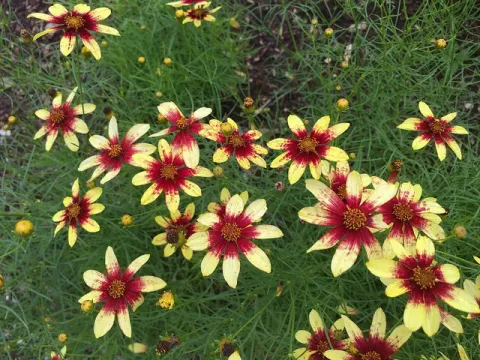
Coreopsis hybrids
Coreopsis hybrids
Sowing Coreopsis hybrids in open ground should be performed in the spring, once the soil has warmed up sufficiently, typically in late April or early May. Autumn sowing is also an option, facilitating natural cold stratification of seeds.
What the section contains
Coreopsis hybrids
For indoor propagation, seeds are sown in seedling trays during March. The seeds require light for germination, so they should be barely covered with a thin layer of fine substrate or pressed firmly into the surface without deep burial.
The optimal germination temperature ranges from 18 to 20 degrees Celsius. Seedlings usually emerge within two weeks, requiring bright indirect light and moderate moisture to prevent etiolation and fungal damping-off.
Seedlings are transplanted to their permanent location once the risk of frost has passed. Planting distance varies between 30 and 40 cm depending on the specific hybrid's mature size and branching habit.
Coreopsis hybrids belong to the Asteraceae family. These plants are appreciated for their extended blooming period and vibrant colors, making them a staple in modern landscaping and herbaceous borders.
These plants thrive in full sun conditions, which is essential for maximizing flower production and maintaining strong, upright stems. Shade exposure often results in weak growth and reduced blooming performance.
Well-draining, moderately fertile soil is crucial. Coreopsis is highly susceptible to root rot in waterlogged conditions, making it vital to ensure adequate soil drainage, especially in heavy clay garden environments.
A neutral to slightly alkaline soil pH is ideal. Over-fertilization, especially with nitrogen-rich compounds, should be avoided, as it encourages excessive foliage growth at the expense of floral development.
While drought-tolerant once established, Coreopsis hybrids benefit from regular irrigation during prolonged dry spells. Water should be applied at the base of the plant to keep the foliage dry and healthy.
The climate requirements include a temperate environment. Most hybrids demonstrate significant hardiness, but protecting the root crown with a layer of mulch in colder regions can improve winter survival rates.
Powdery mildew is a common issue for Coreopsis hybrids, particularly in humid or stagnant air conditions. Management involves using sulfur-based fungicides and ensuring proper plant spacing for improved airflow.
Aphids can infest new growth and flower buds, causing distortion and yellowing. Systemic insecticides are effective in managing heavy infestations, while insecticidal soaps can be used for smaller outbreaks.
Rust diseases may appear as orange or brown spots on leaves. Early detection and the removal of affected plant parts are key strategies to prevent the spread of fungal spores across the entire planting bed.
Slugs and snails can pose a threat to young seedlings and tender leaves during wet spring weather. Physical barriers or organic baits are often employed to protect the plants from such damage.
- Maintain proper spacing to improve air circulation
- Monitor for signs of pest damage weekly
- Remove plant debris in late autumn to prevent disease carryover
- Apply fungicides preventatively during unusually wet seasons