
Mule fat
Baccharis salicifolia
Description
Growing requirements
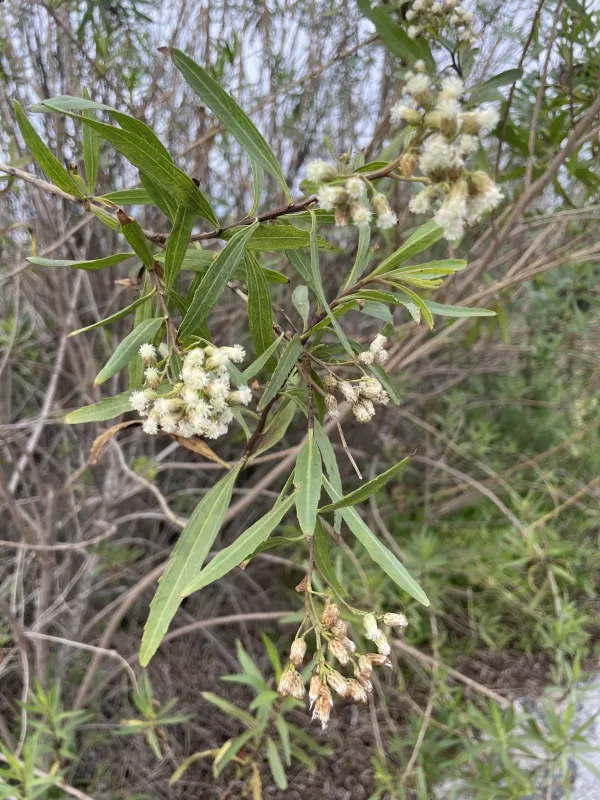
Baccharis salicifolia, commonly known as Mule fat, belongs to the Asteraceae family. It is a perennial evergreen shrub that thrives in riparian habitats, characterized by its long, willow-like leaves and significant ecological role.
The plant is native to the southwestern United States and Mexico, naturally occurring along streams, rivers, and drainage channels. It is well-adapted to environments where soil moisture fluctuates, reflecting its evolutionary origin.
Regarding soil requirements, Baccharis prefers alluvial, sandy, or loamy soils with good drainage capacity. It is highly tolerant of saline conditions, which allows it to thrive in environments where other crops might fail.
Climate adaptability is one of its primary strengths. It flourishes in full sun and warm temperatures, showing a remarkable ability to survive in both desert environments and humid riparian zones with moderate care.
Agricultural management requires seasonal pruning to maintain shape and promote vigor. Propagation is typically achieved through stem cuttings, which reliably produce healthy root systems when kept in moist media under controlled conditions.
Main diseases and pests
While generally hardy, Baccharis salicifolia can be susceptible to fungal infections in poorly drained soils. Root rot is a potential threat, often linked to excessive water stagnation around the base of the plant.
Pest pressures include scale insects and various leaf-chewing larvae. Regular inspection of the foliage during the growing season allows for early detection and manual or organic control measures to be applied.
Mildew can occasionally appear in highly humid conditions with low air circulation. Proper spacing during planting significantly reduces the risk of such diseases and improves overall crop health.
Weed management is vital during the initial establishment phase. Young plants should be kept free from competitive grasses and invasive weeds to ensure that their root systems develop without nutrient competition.
Strategic monitoring of the plant canopy helps in identifying early signs of stress, such as leaf yellowing or stunted growth. Implementing integrated pest management (IPM) practices remains the most sustainable approach for this crop.
Harvesting
The primary agricultural use of Mule fat is focused on soil stabilization and restoration projects. Its extensive root architecture makes it an ideal choice for preventing bank erosion in irrigation systems.
Beyond ecological roles, the plant serves as a late-season nectar source for pollinators. This makes it a valuable asset for commercial apiculture, especially in regions with few alternative autumn forage sources.
The harvesting of biomass for aesthetic or restoration purposes involves structured pruning. By thinning the older stems, growers encourage the development of younger, more vibrant shoots that increase the plant's ornamental value.
Although not a traditional food crop, parts of the plant are investigated for their essential oils and antimicrobial properties. Further research continues into the potential industrial extraction of compounds from its biomass.
Effective harvest cycles depend on the intended end-use of the material. For land stabilization, the plant is left undisturbed to reach maturity, whereas for nursery production, systematic trimming ensures higher quality nursery stock.