
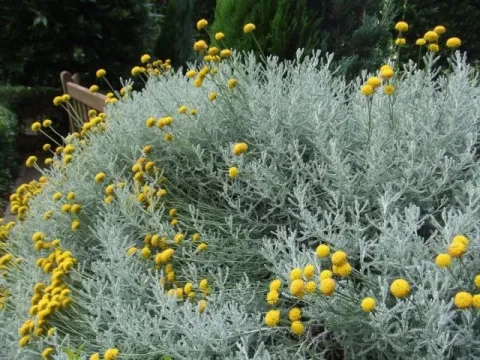
Lavender cotton (Santolina villosa)
Santolina villosa
Santolina villosa, commonly known as a type of lavender cotton, is a hardy evergreen subshrub belonging to the Asteraceae family. It is highly valued for its striking silver-grey, hairy foliage and aromatic profile.
What the section contains
Lavender cotton (Santolina villosa)
The plant thrives in full sun, requiring at least six to eight hours of direct light daily to maintain its compact, mounded habit. Insufficient light leads to leggy growth and reduced oil production.
Well-drained, sandy, or gravelly soils are critical for the health of this species. It is naturally adapted to Mediterranean climates and suffers significantly in heavy, clay-based soils that hold moisture.
Regarding climate, it is drought-tolerant once established but requires protection from excessive winter humidity and frost. In colder regions, planting near south-facing walls or in containers is recommended.
Agrotechnical maintenance includes minimal fertilization, as high nutrient levels stimulate excess vegetative growth that lacks the characteristic scent and winter hardiness of the plant.
The most significant threat to the plant is fungal root rot, primarily caused by waterlogged soil conditions. This is often the primary reason for plant failure in non-Mediterranean climates.
Pests are generally deterred by the plant's essential oils, which act as a natural repellent. However, in poorly ventilated environments, occasional aphid infestations can occur.
Disease management focuses on ensuring excellent air circulation between plants and providing a gritty, well-draining substrate to prevent pathogen accumulation.
Pruning is essential for plant longevity and disease control. Removing spent flowers and woody stems after the main flowering season prevents the buildup of dead plant matter.
If fungal issues are detected, improving drainage and applying copper-based fungicides may help recover the plant, provided the damage to the root system is not extensive.