
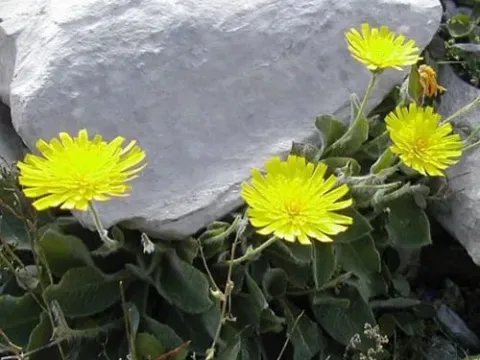
Lawson's Hawkweed
Hieracium lawsonii
Lawson's Hawkweed (Hieracium lawsonii) is a perennial herbaceous plant from the Asteraceae family. Known for its resilience, it is often studied as a niche crop suitable for alpine or sub-alpine agricultural systems.
What the section contains
Lawson's Hawkweed
The plant originates from European mountain ranges, specifically thriving in the Alps and Pyrenees. Its natural distribution indicates a high degree of cold tolerance and the ability to grow in harsh, high-altitude climates.
Regarding soil requirements, this crop demands excellent drainage. It performs best in rocky, sandy, or loamy soils where waterlogging is prevented, ensuring that the root system remains healthy throughout the winter months.
In terms of climate, Lawson's Hawkweed is well-adapted to moderate temperatures and high light intensity. It is not prone to heat stress, provided the soil moisture levels are maintained through proper site selection rather than excessive irrigation.
For successful cultivation, planting should occur in open spaces with minimal competition from aggressive weeds. Initial establishment requires stable soil moisture until the plants have developed a deep, robust root system.
The primary diseases affecting Lawson's Hawkweed include powdery mildew and various leaf rusts, which occur primarily in conditions of high humidity and poor ventilation.
Pest pressure mainly comes from generalist insects like aphids and beetles. These can cause mechanical damage to the foliage, which is particularly detrimental to young, establishing plant stands.
Managing disease risks involves ensuring sufficient plant spacing to promote airflow. This simple measure significantly reduces the development of fungal pathogens across the field.
Integrated Pest Management (IPM) is the recommended approach for this culture, emphasizing the use of beneficial insects and early detection of infestations.
If chemical interventions are necessary, fungicides and insecticides must be applied strictly in accordance with local regulations for perennial forage or botanical crops to ensure environmental safety.