
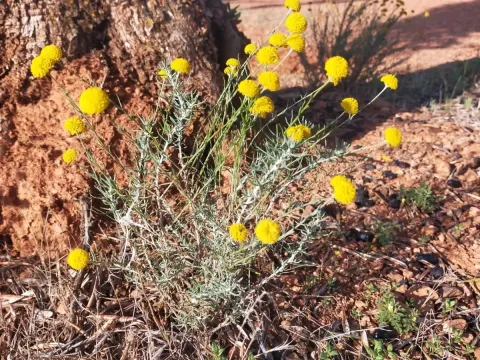
Lavender cotton
Santolina canescens
Lavender cotton (Santolina canescens) is a perennial evergreen subshrub in the Asteraceae family. Seeds can be sown in early spring, ideally under glass or in a controlled indoor environment.
What the section contains
Lavender cotton
The optimal germination temperature is between 18 and 20 degrees Celsius. Seeds should be kept in a moist environment until sprouting occurs, requiring careful ventilation to prevent damping off.
Seedlings are pricked out once they develop their second pair of true leaves. They should be hardened off before being transplanted into their permanent garden location in late spring.
Vegetative propagation is more common in commercial cultivation. Softwood or semi-ripe cuttings are taken during the summer months and placed in a sandy, well-draining rooting medium.
For landscape applications, spacing between plants should be approximately 25 centimeters to allow for adequate airflow while creating a dense, uniform appearance.
This species thrives in full sun and requires well-drained, sandy soil to prevent root issues. It is highly drought-tolerant once established and prefers poor to moderate soil fertility.
Waterlogging is detrimental to the plant, often leading to rapid root decay. If the soil is heavy or clay-like, incorporating grit or sand is essential for successful cultivation.
Lavender cotton prefers a neutral or slightly alkaline soil pH. It is sensitive to extreme humidity and excessive winter moisture, which can cause the plant to die back.
Pruning is a mandatory agricultural practice for this plant. Trimming after flowering helps maintain a compact, mound-like structure and prevents the plant from becoming woody and sparse.
Winter protection, such as a layer of mulch or horticultural fleece, is recommended in regions with freezing temperatures to protect the crown of the plant.
While often grown for ornamental purposes, lavender cotton is also valued for its fragrant essential oils. The yield of biomass is dependent on regular harvesting of fresh, young shoots.
Harvesting typically occurs before the plant fully flowers to maximize the concentration of aromatic compounds. Only the current season's growth should be removed during pruning.
Post-harvest processing involves drying the foliage in a shaded, well-ventilated area. This preserves the color and the essential oil profile required for commercial use in potpourri or extracts.
In landscaping, yield refers to the uniformity and longevity of the plantings. Annual maintenance ensures that the display remains vibrant and free from overly woody branches.
The plant also provides value as a pollinator-friendly species, attracting bees and butterflies, which enhances the overall productivity of the garden ecosystem.
The primary threat to the health of the plant is root rot caused by improper soil moisture levels. Ensuring excellent drainage is the best preventative measure against this condition.
Fungal diseases can thrive if the plants are overcrowded or if the air circulation is poor. Thinning out the plants or increasing planting space can effectively mitigate this risk.
Aphids are the most frequent insect pest, particularly targeting the tender, new growth during the spring. They are usually managed through manual removal or soapy water solutions.
Spider mites can become problematic during hot, dry spells. Regular inspection and increasing air humidity around the plant can help discourage mite infestations.
Overall, this plant is considered robust and resilient. Most health issues arise from improper placement rather than pests or diseases that are difficult to control.