
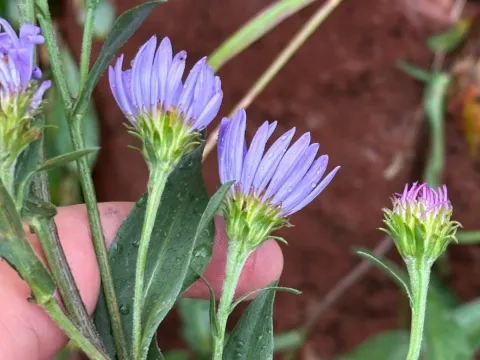
Leafy aster
Symphyotrichum foliaceum
Leafy aster (Symphyotrichum foliaceum) is a perennial herbaceous plant belonging to the Asteraceae family. Native to the mountainous regions of North America, this species is naturally adapted to moist meadow environments and riverbanks.
What the section contains
Leafy aster
The plant is defined by its robust rhizomes and sturdy stems that grow up to 60 centimeters in height. Its specific name, foliaceum, highlights the dense arrangement of leaves along the stem, providing a lush appearance throughout the growing season.
In terms of environmental conditions, this culture thrives best in locations with full sun to partial shade. Exposure to direct sunlight is crucial for stimulating flower bud formation and maintaining the intense blue-violet coloration of the blooms.
Soil requirements involve a preference for well-draining, loamy, and nutrient-rich media. While the plant appreciates moisture, it is sensitive to waterlogged conditions, which can lead to rapid physiological stress and potential root damage.
Agricultural management requires consistent soil moisture levels, especially during mid-summer. Maintaining clear weed-free beds around the plants is essential to ensure that resources such as nitrogen and water are fully available to the aster.
The primary pathological threats to Leafy aster include powdery mildew, a fungal infection favored by humid and stagnant air conditions. Improving plant spacing is the most effective cultural practice to mitigate this risk.
Pests such as aphids and spider mites frequently target the succulent growth at the stem tips. Regular monitoring is advised, as high populations of these insects can significantly reduce the overall vigor and blooming capacity of the plant.
Slugs and snails can cause severe damage to the foliage, particularly in the spring when new growth emerges. Mechanical barriers such as crushed eggshells or copper tape can be effective non-chemical methods for protecting young plants.
Fungal leaf spot diseases may appear during seasons with prolonged rain. Applying organic fungicides or simply removing affected leaves can prevent the pathogen from spreading further into the crown of the plant.
To ensure long-term health, it is recommended to divide mature clumps every 3 to 4 years. This rejuvenating process prevents overcrowding, improves circulation, and refreshes the root environment, leading to more resilient plant growth.