
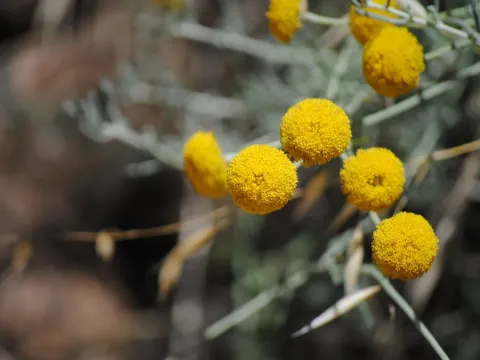
Santolina semidentata
Santolina semidentata
Santolina semidentata is a perennial flowering plant belonging to the Asteraceae family. It is typically propagated through seeds or stem cuttings to ensure uniform growth across the plantation.
What the section contains
Santolina semidentata
When starting from seeds, they should be sown indoors in late winter. Seeds require a short period of stratification at cool temperatures to improve germination rates significantly.
Vegetative propagation via cuttings is highly preferred for preserving specific traits. Cuttings are taken in early summer and rooted in a sterile, well-draining medium under controlled humidity.
Transplanting to the field occurs once the danger of frost has passed. The soil should be prepared to be loose and well-aerated to support root development.
Spacing is a critical factor for success; plants should be set 40-50 cm apart to prevent moisture accumulation and ensure adequate air circulation between individual specimens.
This species is highly adapted to sunny, Mediterranean-like climates and requires full solar exposure to thrive and produce high-quality aromatic compounds.
The soil must be well-draining, preferably with a slightly alkaline or neutral pH. Heavy, waterlogged soils are detrimental and will quickly lead to root decay.
Water requirements are relatively low. Once established, the plants are remarkably drought-tolerant, requiring irrigation only during prolonged dry spells or in extreme heat.
Excessive fertilization should be avoided. High nitrogen levels stimulate excessive vegetative growth, which makes the plant more susceptible to diseases and reduces its overall winter hardiness.
Protection from extreme winter cold is recommended in non-native ranges. Using mulch or covers helps to maintain stable soil temperatures during dormant months.
The commercial use of Santolina semidentata focuses on the extraction of essential oils and the harvesting of dried leaves and flowers for various industries.
Yields are maximized by consistent agrotechnical care, including pruning after flowering to encourage dense foliage growth in the subsequent season.
Harvesting is performed when the plant is in full bloom, as this is when the concentration of secondary metabolites and volatile oils is at its seasonal peak.
In a well-managed plantation, the crop can remain productive for several years, providing stable annual yields of raw herbal material.
Quality control during and after the harvest is vital, as the chemical composition of the oil can be degraded by improper drying techniques or exposure to sunlight.
Fungal pathogens remain the primary threat to this crop. Root rot, caused by standing water in the root zone, is the most common cause of plantation failure.
Poor air circulation, often due to planting density being too high, creates microclimates where powdery mildew and other foliar diseases can easily flourish.
In terms of pests, aphids can occasionally infest new growth during the spring, leading to stunted shoots and decreased oil production if left untreated.
Effective management includes preventative measures such as thinning the canopy and ensuring the planting site has excellent natural drainage.
- Use of pathogen-free starting materials.
- Strict adherence to irrigation schedules.
- Regular field monitoring for pest outbreaks.
- Timely removal of infected plant residues.
Harvesting must take place during dry, clear weather. Collecting material during the early morning hours helps preserve the essential oil content before the daily temperature peak.
Mechanized harvesters or manual shears are used to trim the top 10-15 cm of the plant, ensuring that the woody base remains intact for rapid regeneration.
Post-harvest handling is critical; the harvested biomass should be moved to a shaded, ventilated area immediately to prevent overheating and oil loss.
Drying is conducted at controlled temperatures, keeping levels below 40 degrees Celsius to ensure that sensitive compounds within the plant tissues are not volatilized.
Once dried to the desired moisture content, the material is cleaned of impurities and stored in cool, dark, and dry conditions until it is ready for final processing.