
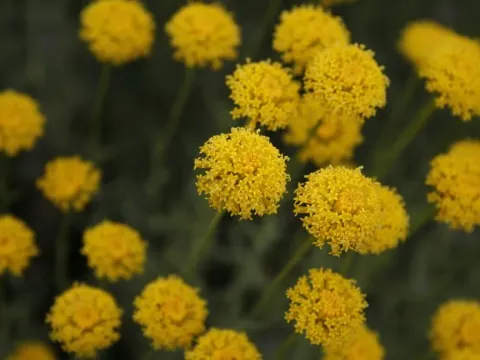
Santolina elegans
Santolina elegans
Santolina elegans is a perennial evergreen shrub belonging to the Asteraceae family, known for its silver foliage and aesthetic appeal.
What the section contains
Santolina elegans
Seeds are typically sown indoors during late winter or early spring using a light, well-draining seed starting mix to ensure optimal germination.
The seeds require light to germinate, so they should be pressed gently into the soil surface rather than being deeply buried in the medium.
Once the seedlings develop their first true leaves, they should be transplanted into individual pots to strengthen their root systems before field planting.
Final outdoor planting occurs once the danger of frost has passed, ensuring the plants are placed in areas with excellent sun exposure.
Santolina elegans thrives in full sun, requiring at least six to eight hours of direct light daily to maintain its compact habit and color.
The species is highly adaptable to poor, rocky, or sandy soils, provided that the drainage is exceptional to prevent water accumulation at the roots.
It is inherently drought-tolerant once established, making it an excellent candidate for xeriscaping or low-maintenance garden designs.
Excessive fertilization should be avoided, as high nutrient levels can cause the plant to become leggy and lose its characteristic silver-grey aesthetic.
In colder climates, plants benefit from a protective mulch layer during winter to protect the woody base from severe temperature fluctuations.
Root rot is the most common health issue for Santolina elegans, typically caused by overwatering or soil that retains too much moisture.
Aphids can sometimes infest new growth, especially during mild spring weather, requiring regular inspection to keep the population under control.
Powdery mildew may occur if the plants are spaced too closely, restricting the airflow around the foliage and creating a humid environment.
Spider mites can be a problem in hot, dry summers; maintaining slight moisture and good airflow can help mitigate the risk of infestation.
Proper sanitation, including the removal of dead or diseased branches, is critical to preventing the spread of fungal pathogens throughout the garden.
Harvesting for essential oils or decorative dried arrangements is best done during peak flowering to capture the plant at its chemical and visual prime.
Stems should be cut early in the day and hung upside down in a cool, dark, and well-ventilated area to ensure uniform drying and color retention.
Following the harvest, a rigorous pruning is essential to remove spent flower stalks and shape the shrub for the upcoming growing season.
This pruning maintenance prevents the plant from becoming woody and sparse at the base, which is a common issue with older specimens.
The dried foliage remains fragrant for a long period, making it a popular choice for sachets and traditional herbal crafts.