
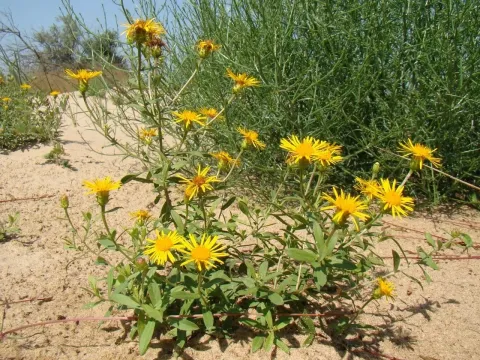
Sandy Inula
Inula sabuletorum
The sowing of Sandy Inula is best performed in early spring as soon as the soil warms up to approximately 8–10 degrees Celsius. Seeds require a preliminary stratification period of one month at low positive temperatures to ensure uniform germination.
What the section contains
Sandy Inula
The seeds should be sown at a depth of 1–2 centimeters, as the small size of the seeds makes them sensitive to the thickness of the soil layer. It is typically sown in rows with spacing of 45–60 centimeters to facilitate mechanical and manual maintenance.
During the first year of growth, the plants develop slowly, forming a basal rosette of leaves. The optimal plant density should be around 8–10 plants per linear meter to ensure effective field coverage once the rows close in.
Greenhouse cultivation for seedlings is a recommended practice in commercial operations to accelerate plant establishment before transplanting into the field. This method significantly improves the survival rate of young plants.
Fall sowing is also possible in regions with mild winters, allowing the seeds to undergo natural stratification and germinate as early as possible in the following spring.
Sandy Inula is a member of the Asteraceae family, naturally adapted to sandy, well-drained substrates. The crop is highly photophilous and requires full sun exposure; it does not tolerate shading of any kind.
The best growth performance is observed in light, sandy loam soils with a neutral to slightly alkaline pH. The plant is notably drought-tolerant due to its deep taproot system, which can access moisture at significant depths.
Excessive soil moisture is a critical factor to avoid, as waterlogged conditions promote root rot and can lead to complete plantation failure. Proper field drainage is mandatory for successful cultivation.
Agricultural management requires minimal fertilizer application, as an excess of nitrogen can negatively impact the concentration of essential active compounds. Phosphorus and potassium-based fertilizers are preferred to support overall plant health.
This perennial herb can occupy the same site for 5–7 years. It exhibits high winter hardiness in temperate climates, making it a reliable and long-lasting crop for medicinal herb farmers.
The cultivation of Sandy Inula aims at harvesting floral materials and roots for medicinal use. Under professional management, the dry yield of flower heads can range from 0.5 to 1.2 metric tons per hectare.
Maximum yield potential is typically achieved by the third year of vegetation, once the plant has fully established its root structure. Yields are generally most consistent and economically viable from the third year onward.
Harvest timing must be precise, coinciding with the peak flowering phase to ensure high quality. Delayed harvesting results in seed shattering and a decrease in the concentration of valuable active ingredients.
Post-harvest processing involves drying the material in well-ventilated areas at temperatures not exceeding 45 degrees Celsius to preserve essential oils and flavonoids. Efficient drying is critical for the market value of the crop.
The implementation of drip irrigation during the driest months of the growing season can significantly boost vegetative biomass and improve the consistency of harvestable yields.
Sandy Inula is susceptible to fungal diseases such as powdery mildew, especially during seasons with high humidity and poor air circulation. Proper spacing and ventilation are the primary defense mechanisms against these pathogens.
Insect pests that target buds and flowers represent a major threat to the commercial value of the crop. Regular monitoring and, if necessary, integrated pest management practices are essential to protect the harvest.
Soil-dwelling larvae, such as wireworms, can damage the root system, weakening the plant. Crop rotation is highly recommended to minimize the impact of soil-borne pests on the medicinal plantation.
Weeds pose a significant challenge during the first year of growth due to the slow initial development of the crop. Regular cultivation between rows is vital until the plants are large enough to compete effectively.
Proactive prevention, including the use of certified healthy seeds and the removal of plant debris after harvest, helps maintain a clean and productive environment for long-term cultivation.