
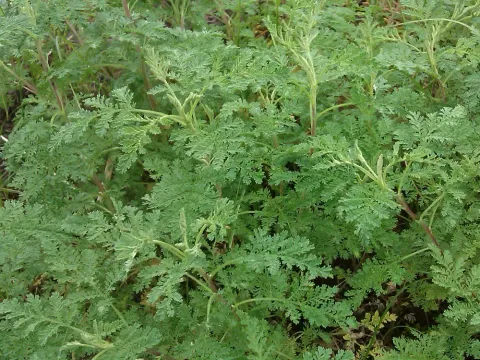
Santolina-leaved wormwood
Artemisia santolinifolia
Santolina-leaved wormwood (Artemisia santolinifolia) is a perennial herbaceous plant belonging to the Asteraceae family. It is recognized for its unique foliage and high adaptability to harsh environmental conditions.
What the section contains
Santolina-leaved wormwood
The plant originates from the mountainous regions of Central and East Asia, including Mongolia and Siberia. It is typically found in stony steppes, rocky outcrops, and open mountain slopes.
To cultivate this crop effectively, producers should provide well-drained, sandy or loamy soils. The species thrives in alkaline to neutral pH environments and does not tolerate waterlogging under any circumstances.
The plant is highly climate-resilient, exhibiting excellent drought and frost tolerance. It requires full sunlight exposure to maintain its compact growth habit and high concentration of secondary metabolites.
Agronomic management involves periodic mechanical weeding in the first year. Once established, the plant forms a robust canopy that effectively outcompetes invasive weed species in the field.
Common phytosanitary issues include powdery mildew, which can affect the foliage during periods of stagnant, humid weather. Maintaining proper spacing between rows is critical for airflow.
Insects like aphids or spider mites may pose a threat during hot, dry spells. Monitoring during the early vegetative stage is essential to prevent significant defoliation and yield loss.
Integrated pest management strategies are encouraged to protect the quality of the raw material, as synthetic pesticides can leave residues that are undesirable in pharmaceutical applications.
Good field hygiene, including the removal of dead plant tissue after the season, significantly reduces the risk of overwintering pathogens in the plantation.
Biological controls such as ladybugs and parasitic wasps are highly effective in managing common aphid populations in medicinal herb plots.
The harvesting window occurs during the peak flowering stage. This is when the concentration of essential oils and active medicinal ingredients is at its maximum within the stems and leaves.
Harvesters should use sharp tools or specialized machinery to cut the upper portions of the shoots, ensuring the rootstock remains intact for regrowth in subsequent seasons.
Post-harvest processing involves rapid drying in shaded, well-ventilated structures. Excessive direct sun exposure must be avoided to preserve the plant's volatile aromatic compounds.
The dried product is then sorted and processed according to end-use requirements, ranging from herbal medicine tinctures to industrial essential oil distillation.
Industrial applications include the production of antimicrobial agents, digestive supplements, and specialized essential oils for the cosmetic and perfume industries.