
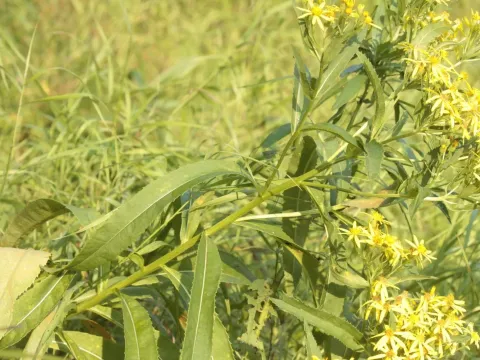
Saracen's groundsel
Senecio sarracenicus
Saracen's groundsel (Senecio sarracenicus) is a perennial herbaceous plant belonging to the Asteraceae family. It is naturally found in temperate regions of Eurasia, thriving in moist environments such as river banks, damp meadows, and riparian habitats where moisture is constant.
What the section contains
Saracen's groundsel
Botanically, the plant is characterized by its tall, erect stems and lanceolate leaves, which can reach impressive heights under favorable conditions. It utilizes a robust rhizome system to anchor itself in damp soil, facilitating vegetative spread and structural integrity of the plant.
Optimal growth requires soils with high moisture retention capacity and significant organic matter content. While the plant prefers moisture, it must have adequate soil drainage to prevent root rot, making river-adjacent or low-lying agricultural zones ideal for consistent yields.
In terms of agricultural management, the plant benefits from early spring cultivation to control invasive weeds. Because it is a light-demanding species, spacing should be carefully managed to ensure uniform exposure to sunlight across the entire planting area for maximal biomass production.
The plant holds value in medicinal research due to its secondary metabolite profile and is often used in restoration ecology for stabilizing soil in damp, riparian zones. It represents a functional crop for specific ecological and pharmacological niches.
The primary biological threats involve fungal infections such as powdery mildew and rust, particularly in seasons with high humidity or poor canopy ventilation. Effective management includes ensuring wide row spacing to promote air circulation and reduce the incidence of moisture-related pathogens.
Insect pests, including aphids and various leaf-chewing beetles, can cause significant damage during the peak growing season. Integrated pest management strategies, focusing on early detection and biological control methods, are essential to maintain the health and vigor of the crop throughout its lifecycle.