
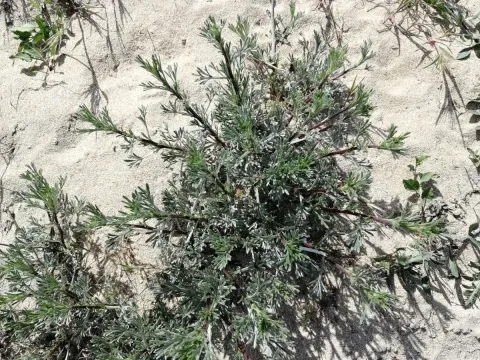
Sand wormwood
Artemisia arenaria
Sand wormwood (Artemisia arenaria) is a resilient perennial herb belonging to the Asteraceae family. It is increasingly recognized for its ability to thrive in challenging soil conditions.
What the section contains
Sand wormwood
The sowing process is typically carried out in late autumn or early spring. Optimal timing is when the soil temperature begins to rise, ensuring adequate moisture for the germination of small seeds.
Due to the tiny size of the seeds, they should be sown on the surface or at a very shallow depth. Light rolling is recommended to ensure proper seed-to-soil contact without burying them too deeply.
For commercial cultivation, row planting is the preferred method. A row spacing of 50 to 60 centimeters provides enough room for mechanical weeding and ensures efficient maintenance of the herb field.
The initial growth phase is characterized by slow development. Preparing a clean seedbed free of perennial weeds is crucial for the establishment of a healthy crop in the first year.
As the name suggests, the plant is highly adapted to sandy and sandy-loam soils. It prefers well-drained, porous environments that allow for significant aeration of the root system.
Sand wormwood is extremely drought-tolerant and requires full sun exposure. It is highly suitable for the reclamation of eroded or low-fertility land where traditional crops struggle to survive.
The plant has a deep, branched root system that enables it to access water deep within the soil profile, making it resistant to long periods of meteorological drought.
Nitrogen fertilization should be managed carefully. Excessive nitrogen can promote vegetative growth at the expense of secondary metabolites, such as essential oils, which are the main commercial value.
It is sensitive to waterlogging. Poorly drained, heavy clay soils are unsuitable and will likely lead to root rot and significant crop loss, so field selection should focus on elevated or naturally dry areas.
The yield of sand wormwood is optimized through consistent management. Harvests typically begin in the second year of growth, once the plant has established a robust root system.
Peak productivity is usually observed between the third and fourth years. After this cycle, the density and quality of the medicinal yield may decline, necessitating crop rotation or field rejuvenation.
The harvest involves cutting the aerial parts of the plant during the stage of mass flowering. This period is critical, as it corresponds to the highest concentration of phytochemicals.
Mechanical harvesting using specialized mowers is standard practice. Post-harvest, the raw material must be transported quickly to prevent overheating and degradation of sensitive aromatic compounds.
Proper drying is essential for the final product quality. The material should be processed in shaded, well-ventilated drying facilities at moderate temperatures to retain its medicinal properties.
Sand wormwood is naturally hardy, though it can be susceptible to fungal issues if humidity levels become excessively high during the growing season.
Powdery mildew and various rust fungi are the most common diseases. These are best managed by ensuring correct plant spacing and maintaining good air circulation throughout the plantation.
Pest threats include aphids and leaf-eating beetles. These insects can reduce the quality of the biomass, directly impacting the marketability of the dried herb.
Integrated pest management (IPM) is the best approach. Using biological control agents and maintaining field hygiene are often preferred over chemical intervention for medicinal crop safety.
Regular monitoring of the crop allows for early detection of issues, preventing minor infestations from becoming widespread problems that could jeopardize the season's yield.