
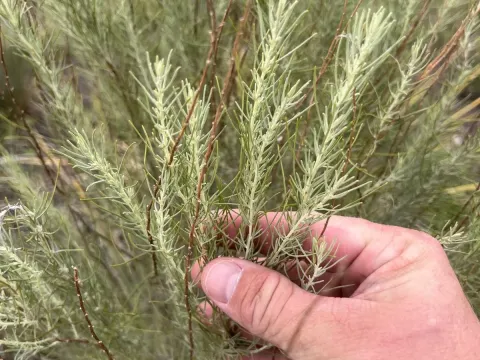
Sand sagebrush
Artemisia filifolia
Sand sagebrush, scientifically known as Artemisia filifolia, is primarily propagated through seeds. The sowing process is most successful when performed in early spring, allowing the seeds to germinate as soil temperatures reach a comfortable threshold of 10–12 degrees Celsius.
What the section contains
Sand sagebrush
Because the seeds are remarkably small and light, they require precise handling during planting. A shallow sowing depth of less than 1 centimeter is recommended, as deeper burial can prevent the seedlings from reaching the surface before their energy reserves are depleted.
In large-scale restoration projects, mechanical seeding methods are often utilized, ensuring that the seeds are barely covered by soil. This technique mimics natural conditions where the seeds are partially buried by wind and sand movement.
Proper spacing is crucial to reduce inter-plant competition for moisture in arid environments. Typically, rows are spaced at intervals that allow mature shrubs to develop their full, characteristic rounded shape without overcrowding.
Establishment may be slow, as the plant prioritizes deep root development over rapid above-ground growth during the first season. Patience during the initial establishment phase is key to achieving a healthy and long-lived stand of Artemisia filifolia.
As a true xerophyte, Artemisia filifolia is uniquely adapted to thrive in sandy soils and dunes. Its native range spans arid regions, where it plays a vital role in stabilizing shifting sand and preventing wind erosion.
High solar irradiance is a non-negotiable requirement for this species. It demands full sun exposure throughout the growing season, which ensures the maintenance of its silvery, thread-like foliage and high concentration of aromatic oils.
The plant is highly resilient to temperature extremes, demonstrating remarkable tolerance to both the intense heat of desert summers and the harsh cold of winter. Its deep taproot system allows it to access water sources unavailable to shallower species.
Soil drainage must be excellent to support the health of this shrub. It strongly prefers coarse-textured, sandy soils that allow for rapid infiltration of moisture, effectively preventing the root-level waterlogging that would lead to rapid decay.
In terms of soil fertility, the plant is undemanding and even performs poorly in high-nutrient soils. It is well-adapted to low-nitrogen environments and does not require conventional fertilization, which could otherwise weaken its stems.
Diseases in sand sagebrush are uncommon and usually associated with poor site selection, such as planting in areas with poor drainage or excessive humidity. Powdery mildew can occur if air circulation is restricted around the shrub canopy.
The plant possesses inherent chemical defenses, including bitter compounds and essential oils, which discourage most common agricultural pests. However, during periods of extreme environmental stress, some opportunistic sucking insects like aphids may colonize the young growth.
Preventative management is the most effective strategy for dealing with potential threats. Ensuring proper spacing and selecting well-drained locations drastically reduces the likelihood of fungal issues and helps maintain plant vigor throughout the seasons.
Root rot is the most significant threat to plant longevity, usually triggered by compacted soil or high water tables. Avoiding areas with standing water and heavy clay content is the primary method of protecting the stand from irreversible damage.
Regular monitoring during the initial growth stages can help identify localized problems early. However, due to its status as a resilient native shrub, active chemical intervention is rarely necessary and often counterproductive for this species.