
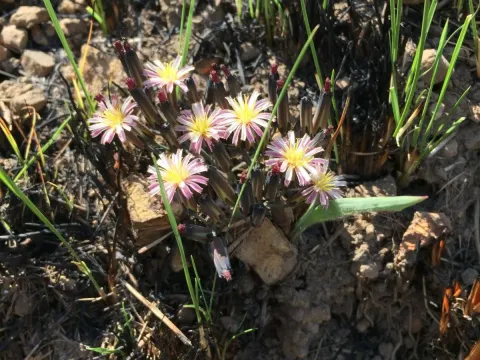
Launaea nana
Launaea nana
Launaea nana, commonly known as dwarf launaea, is a resilient herbaceous perennial belonging to the Asteraceae family. It is characterized by a low-growing rosette form that helps it withstand harsh environmental conditions in arid zones.
What the section contains
Launaea nana
The plant is native to drylands and semi-desert regions, where it has adapted to survive in environments with poor soil quality and limited water availability. Its deep root system is essential for accessing moisture deep within the soil profile.
To cultivate Launaea nana successfully, well-draining, sandy, or stony soils are required. The plant performs poorly in heavy, waterlogged soils, which can lead to root rot and diminished growth rates.
High levels of solar radiation are necessary for the optimal physiological development of the species. It is a heliophytic plant that thrives in open, sunny locations without competition from larger vegetation.
Agronomic management involves minimal disturbance of the soil structure. As a drought-tolerant crop, it requires low maintenance once established, making it a viable candidate for sustainable land restoration projects.
The primary threats to Launaea nana crops are fungal pathogens, specifically those causing root and crown rots. Prevention through proper irrigation management and soil aeration is critical for ensuring a healthy stand.
Insect pests, including various aphids and sap-sucking insects, pose a risk during the early stages of plant development. Integrated pest management strategies, including the use of biological control agents, are recommended.
Powdery mildew can occur if ambient humidity levels remain consistently high around the leaf rosette. Maintaining adequate air circulation between plants helps to reduce the incidence of this fungal disease.
Weed competition remains a challenge, as the slow-growing nature of the species in its early phase makes it vulnerable to more aggressive invaders. Manual weeding is often the most effective control method.
Regular scouting is essential to identify early symptoms of both biotic and abiotic stresses. Taking prompt action ensures that the crop remains productive throughout the entire growing season.