
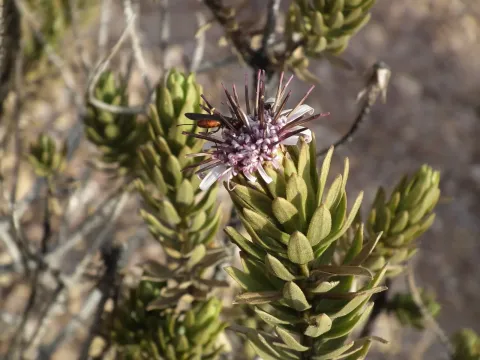
Plazia
Plazia
Plazia is a genus of perennial herbaceous plants belonging to the Asteraceae family. Primarily originating from the high-altitude regions of Central Asia, these plants have evolved to survive in harsh, rocky, and semi-arid environments where other crops struggle to persist.
What the section contains


Plazia
The cultivation of Plazia requires conditions that mimic its natural mountain habitat. High solar radiation and well-drained, porous soils are essential for its development. The plant is exceptionally hardy, capable of withstanding significant temperature fluctuations and prolonged periods of drought.
Soil quality should lean towards neutral or slightly alkaline pH levels. Because of its native environment, the plant does not require high levels of soil nutrients. Excessive irrigation or waterlogged soil is highly detrimental to its taproot system and can lead to rapid decay.
Agricultural management of Plazia involves minimal intervention. Given its slow growth rate, especially during the seedling stage, it requires a weed-free environment to establish itself properly. Proper row spacing and seedbed preparation are critical for successful stand establishment.
The utilization of Plazia is often focused on botanical research and specialized pharmacological applications. Understanding its growth requirements is essential for conservationists and agriculturalists working with rare or niche botanical species in arid regions.
The primary threats to Plazia are fungal infections caused by poor soil drainage and high humidity. Root rot is the most common condition leading to plant loss, particularly in non-native or intensive greenhouse environments where airflow is insufficient.
Pests such as aphids and specialized leaf-feeding insects are frequent invaders of the Asteraceae family. Regular scouting is necessary to prevent these pests from reaching a threshold that could cause significant economic loss or physical damage to the plant population.
Weed competition is a constant challenge for Plazia. Due to its slow initial development, the plant cannot compete with aggressive weeds. Farmers must prioritize mechanical weeding or mulching techniques to ensure that nutrients and light remain available for the Plazia plants.
Nutritional deficiencies, specifically regarding trace elements, may occur if the soil is severely depleted. While the plant is adapted to poor soils, horticultural care might require minor adjustments to soil micronutrients to ensure optimal health and reproductive success.
The sensitivity of Plazia to harsh chemicals necessitates an integrated pest management (IPM) approach. Over-reliance on synthetic pesticides is discouraged, as the plant reacts poorly to standard chemical treatments often used in mainstream agricultural production.