
Plantain-leaved pussytoes
Antennaria plantaginifolia
Description
Growing requirements
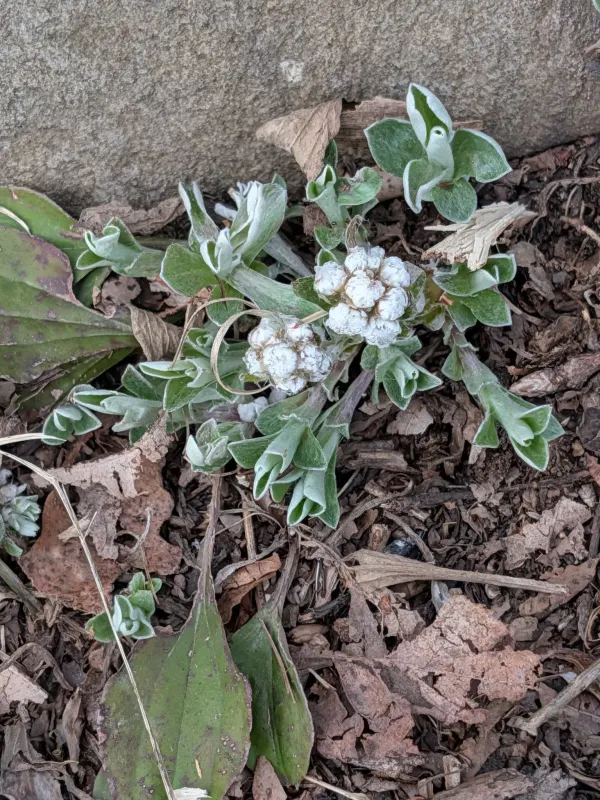
Plantain-leaved pussytoes (Antennaria plantaginifolia) is a perennial herbaceous plant belonging to the Asteraceae family. Native to North America, this species thrives in dry, open woodlands and rocky barrens, demonstrating excellent adaptability to challenging environments.
The plant is defined by its distinct basal rosettes of leaves that resemble the common plantain. The leaves are covered in fine, silvery hairs, which serve as an adaptation to reduce water loss and provide the plant with a unique, velvet-like aesthetic appeal.
As a mat-forming ground cover, it spreads slowly through underground stolons, creating dense, low-growing colonies. The flower stalks produce clustered, white-to-pinkish flower heads that resemble the pads of a cat's paw, hence the common name.
Successful cultivation requires soil that mimics its natural habitat: sandy, gritty, or well-drained loamy soil with low fertility. It is critical to avoid heavy, clay-rich soils that retain moisture, as the plant is highly susceptible to root rot.
In terms of light requirements, the plant prefers full sun to partial shade. While it is quite hardy and drought-tolerant once established, providing consistent initial irrigation during the first growing season helps in developing a deep and robust root system.
Main diseases and pests
Root rot, caused primarily by poor drainage or overwatering, is the most significant threat to the survival of the plant. Maintaining adequate soil aeration is the most effective cultural practice to prevent the decline and eventual death of the colony.
Powdery mildew may occur if the plants are situated in areas with high humidity and stagnant air. Proper spacing during initial planting is essential to ensure adequate airflow around the foliage, which prevents moisture accumulation and fungal growth.
Insect pests such as aphids are occasionally observed, though they rarely cause major damage to established patches. Monitoring for signs of infestation during the spring is recommended to intervene before the colony becomes stressed or weak.
Weed encroachment is a primary concern for newly established mats. Because the plant grows relatively slowly, competitive weeds can quickly overshadow it, depriving it of necessary light and space during the establishment phase.
General maintenance involves light cleanup of dead foliage in the spring to encourage new growth. By following basic site-selection principles, such as choosing well-draining soil, the plant remains a remarkably resilient and low-maintenance ornamental species.