
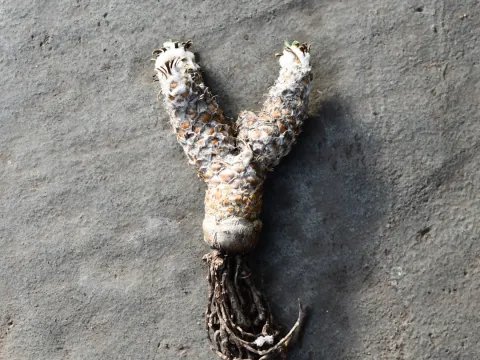
Othonna lepidocaulis
Othonna lepidocaulis
Othonna lepidocaulis is a fascinating succulent species belonging to the Asteraceae family. Native to the arid regions of South Africa, this plant has evolved to survive in harsh, rocky environments where water is scarce for most of the year.
What the section contains
Othonna lepidocaulis
The plant is characterized by a unique caudex-like stem covered in distinct scales, which functions as a water-storage organ. This morphological adaptation allows the species to endure prolonged droughts, making it a highly specialized plant in its natural habitat.
Cultivation requires an extremely porous, well-draining substrate. A mix primarily composed of inorganic materials such as pumice, perlite, and coarse sand is recommended to ensure rapid drainage and prevent moisture from lingering around the roots.
Bright, direct sunlight is essential for maintaining the plant's compact form. Without sufficient light, the stem tends to become etiolated and weak, losing the structural integrity that is vital for the plant's health and aesthetic appeal.
The watering strategy must follow the natural growth cycle of the plant. Active growth occurs during cooler periods, during which moderate watering is required, while the plant remains dormant and should be kept dry throughout the hottest months of the summer.
Root rot is the most significant threat to Othonna lepidocaulis. Because of its extreme sensitivity to moisture, any failure in the substrate drainage or incorrect irrigation frequency can lead to the rapid decay of the root system and stem.
Mealybugs are common pests that can hide within the scales of the stem. Their small size and cryptic nature make them difficult to detect early, necessitating regular, thorough inspections of the plant's surface during the growing season.
Poor ventilation promotes the development of fungal infections, particularly on the surface of the stem. Maintaining adequate airflow is crucial to prevent the growth of mold and mildew, especially in humid or confined growing spaces.
Nitrogen toxicity is a common issue caused by over-fertilization. Using high-nitrogen fertilizers stimulates rapid, weak growth that makes the plant much more susceptible to physical damage and opportunistic pathogen attacks.
Cold, damp conditions during dormancy are lethal. If the plant is exposed to moisture while temperatures are low, it will quickly succumb to rot, necessitating a strictly dry environment during the resting phase to ensure survival.