
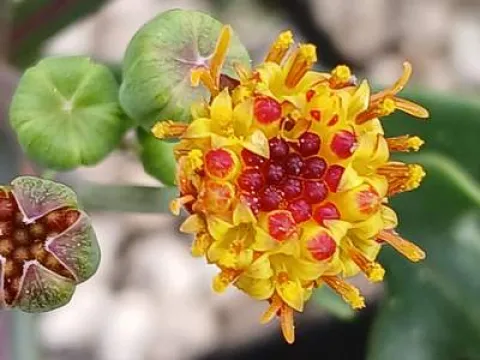
Othonna lobata
Othonna lobata
Othonna lobata is a perennial succulent plant native to the arid regions of Southern Africa, belonging to the diverse Asteraceae family. It is widely recognized for its evolutionary adaptation to harsh environments, featuring a fleshy rootstock capable of moisture retention.
What the section contains
Othonna lobata
The plant exhibits a rosette form with distinct lobed leaves, which serves as a primary characteristic for identification. These leaves are designed to maximize water efficiency under intense sunlight and high temperature fluctuations common in its habitat.
Cultivation requires specialized soil conditions, specifically a highly porous, gritty, or sandy substrate. The plant cannot tolerate compacted soil, which inhibits root respiration and increases the likelihood of physiological stress.
Environmental needs are strictly seasonal, mimicking the native climate. It requires bright, indirect to direct light for most of the year, coupled with a well-defined cycle of moisture during the growing season and complete drought during the dormant phase.
Agronomic management relies on precise irrigation control. The substrate must be allowed to dry completely between watering events to prevent root damage, which is the most common cause of mortality in cultivation.
The primary threats to Othonna lobata in a controlled agricultural or domestic setting are fungal diseases resulting from overwatering and poor ventilation in the growing environment.
Root rot pathogens represent the most significant threat to the survival of the plant. Maintaining sterile conditions and ensuring excellent drainage are critical protocols to prevent the establishment of decay-inducing fungi.
Insect pests, particularly mealybugs, are frequently attracted to the plant's succulent tissues. These pests hide in crevices of the leaf rosettes, necessitating frequent inspections and the use of targeted systemic or contact insecticides.
Spider mites can also become problematic if the ambient humidity remains consistently low and stagnant, as they quickly colonize the leaf surface and diminish the plant's vigor.
Adhering to strict sanitation and integrated pest management practices ensures that the culture remains healthy and productive throughout its long life cycle, preventing large-scale infestation.