
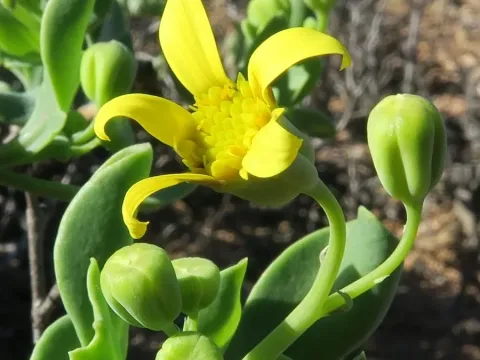
Othonna quercifolia
Othonna quercifolia
Othonna quercifolia is a perennial succulent plant belonging to the Asteraceae family. Native to the arid regions of Southern Africa, it has evolved to thrive in environments with irregular rainfall and intense solar radiation.
What the section contains
Othonna quercifolia
Botanically, the species is recognized by its thickened, succulent leaves that feature distinct lobed margins, resembling those of an oak tree. The plant develops a robust, water-storing root system that allows it to endure extended dry periods.
For successful cultivation, the plant requires a spot with bright, direct light. Exposure to adequate sunlight is crucial to maintain the plant's structural integrity and prevent the etiolation of the stems, which is common in low-light conditions.
The growing medium must be porous and provide excellent drainage. A specialized substrate composed of coarse sand, perlite, and a small portion of potting mix is highly recommended to mimic its natural habitat and prevent rot.
In terms of usage, this plant is primarily valued as an ornamental specimen in succulent collections. It is widely cultivated in greenhouses or as a container plant in temperate zones, adding aesthetic variety to desert-themed displays.
The most significant threat to Othonna quercifolia is overwatering, which leads to rapid root decay. Poor drainage or waterlogged soil will almost certainly result in the loss of the specimen due to fungal pathogens.
Common pests include mealybugs, which are often found in the leaf crevices, and spider mites, which thrive in dry indoor environments. These pests can severely weaken the plant by feeding on its nutrient-rich succulent tissues.
Preventive maintenance involves strictly observing the drying cycles of the soil. Never allow the plant to sit in standing water, as maintaining dry conditions around the root crown is essential for disease prevention.
If pests are identified, treatment with systemic insecticides or gentle horticultural soaps is advised. It is important to inspect new acquisitions thoroughly to ensure the health of the existing plant collection.
Consistent airflow around the plant is another critical aspect of its management. By maintaining good ventilation and dry surroundings, you minimize the risk of secondary infections and ensure the plant remains vigorous throughout its growth cycle.