
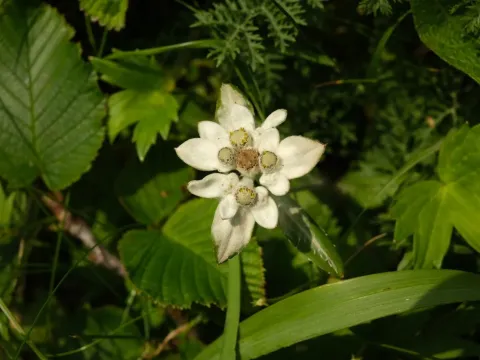
Discolored edelweiss
Leontopodium discolor
Discolored edelweiss (Leontopodium discolor) belongs to the Asteraceae family. This perennial herbaceous plant is native to the rocky and mountainous regions of East Asia, where it has evolved to thrive in harsh, nutrient-poor environments.
What the section contains
Discolored edelweiss
The plant requires well-drained, gritty, or sandy soils with a neutral to slightly alkaline pH. Proper drainage is the most critical factor for survival, as the root system is highly susceptible to rot if exposed to waterlogged conditions.
As a high-altitude species, it demands full sun exposure. Sunlight is essential for maintaining the characteristic silvery-white tomentose hairs on the leaves, which protect the plant from excessive evaporation and UV radiation.
The culture is extremely cold-hardy, capable of surviving harsh winters in alpine climates. However, it requires a dry environment during dormancy to prevent root damage caused by freezing excess moisture in the soil.
Beyond its ornamental use in rock gardens, Leontopodium discolor has potential applications in cosmetics and traditional medicine due to its high concentration of secondary metabolites and antioxidant properties.
Root rot is the primary threat to Discolored edelweiss populations. This condition is almost exclusively caused by overwatering or the use of heavy, clay-rich substrates that retain too much moisture.
Powdery mildew is a common fungal threat when the plant is grown in areas with high humidity and poor air circulation. Improving spacing and ensuring adequate airflow are essential preventative measures.
Aphids can occasionally infest young shoots, particularly during the spring growth phase. These pests weaken the plant by feeding on phloem sap, potentially inviting secondary fungal infections.
Nematode infestations can severely compromise the root health of the plants. Infected plants often show stunted growth and premature yellowing, necessitating the removal and destruction of affected specimens.
Effective management includes maintaining a dry growing environment, selecting resistant cultivars where possible, and using selective pesticides only when pest populations exceed the economic threshold.