
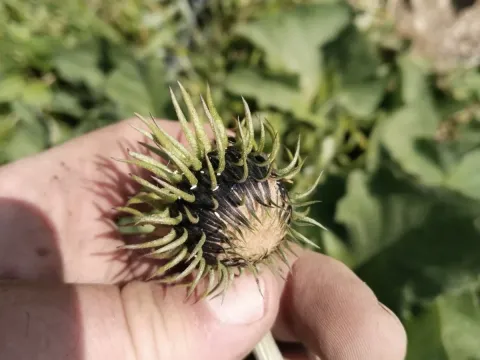
Dolomiaea
Dolomiaea
Dolomiaea, particularly the species Dolomiaea costus, requires precise conditions for germination, mimicking its natural alpine environment. The seeds typically need a cold stratification period to break dormancy and ensure high germination rates when temperatures rise in spring.
What the section contains
Dolomiaea
For cultivation, seeds should be sown in a well-draining, loose, and gritty substrate. Surface sowing or very shallow planting is recommended, as the seeds require sufficient light to trigger the developmental processes necessary for seedling establishment.
The optimal time for sowing is early spring. During the initial growth phase, maintaining consistent soil moisture is crucial; however, the substrate should never be waterlogged, as this leads to the rapid development of fungal pathogens and seed decay.
Once seedlings emerge, they require high light intensity. If grown in a greenhouse or nursery, supplemental lighting may be necessary if natural levels are insufficient. Proper spacing must be ensured to allow for adequate air circulation around each plant.
Transplanting into the field should occur only after the risk of frost has passed, ensuring the plants have developed a strong enough root system to adapt to the open environment and varying temperature regimes.
Dolomiaea is a member of the Asteraceae family, native to the high-altitude regions of the Himalayas and Tibet. Consequently, it thrives in environments characterized by cool temperatures, high solar radiation, and significant diurnal temperature fluctuations.
Soil requirements are strict: the plant needs sandy or loamy soils with exceptional drainage. In agricultural settings, it is often necessary to amend native soils with gravel or organic matter to prevent compaction, which is detrimental to the taproot development of this species.
The soil pH should ideally be neutral to slightly acidic. Dolomiaea is sensitive to excessive nutrient availability, particularly nitrogen, which can lead to rapid, weak vegetative growth that compromises the quality of the roots harvested for essential oils.
Humidity and airflow are critical factors. The plant prefers moderate air humidity and dislikes stagnant, hot air. Proper site selection, preferably with exposure to mountain breezes or open landscapes, helps maintain plant health and reduces the risk of foliar diseases.
Consistent, moderate moisture is better than erratic watering. The plant is drought-tolerant once established, but peak biomass production requires stable conditions throughout the growing season.
The economic value of Dolomiaea lies in its root, which contains complex compounds, including sesquiterpene lactones and essential oils. The yield is heavily dependent on the duration of the growing cycle, with maturity typically reached by the third or fourth year.
Maximizing yield involves careful management of the plant's life cycle. Harvesting too early results in low concentrations of active ingredients, while delaying harvest beyond the optimal point can lead to woody, fibrous roots with lower oil quality.
In commercial cultivation, yields can vary significantly based on elevation and climate. High-altitude sites generally produce roots with a higher concentration of secondary metabolites, making them more valuable for the pharmaceutical industry.
Field maintenance, including manual weed control and occasional root stimulation through soil aeration, contributes to a more uniform and higher-quality harvest. The goal is to obtain a fleshy, robust root system with high aromatic intensity.
The harvest should be performed when the above-ground biomass shows signs of senescence, indicating that the plant has redirected its energy reserves into the root system for the winter dormancy period.
Root rot is the primary threat to Dolomiaea, often caused by Pythium or Phytophthora species thriving in poorly drained, over-saturated soils. Once established in the root zone, these pathogens can quickly decimate an entire crop.
Soil-dwelling pests, including wireworms and nematodes, pose a significant risk by creating feeding lesions on the roots. These wounds serve as entry points for bacterial and fungal infections, necessitating careful soil preparation and potential pre-planting sanitation.
Foliar diseases, such as powdery mildew, may occur in conditions of poor air circulation or high humidity. Maintaining wide row spacing and ensuring the foliage dries out quickly after rainfall are effective preventive measures.
Weed competition is particularly challenging during the first year. Because Dolomiaea grows slowly in its early stages, it can easily be overtaken by invasive species, which shade the plants and deplete nutrients from the soil.
The use of integrated pest management (IPM) is highly recommended. Relying on biological controls and strict crop rotation cycles helps maintain a healthy soil environment without the need for excessive chemical interventions that could taint the final medicinal product.
Harvesting requires precision to ensure the integrity of the root. Mechanical tools, such as deep-digging ploughs or specialized forks, are used to lift the root system carefully from the soil without snapping or bruising the taproot.
Post-harvest cleaning must be performed immediately. Soil particles should be removed gently using brushes or low-pressure water. It is essential not to strip the outer bark of the root, as this layer is particularly rich in beneficial chemical compounds.
After cleaning, roots are often cut into segments to facilitate uniform drying. This process must be controlled, using low-temperature drying facilities, as temperatures exceeding 45 degrees Celsius can degrade the volatile essential oils.
The final stage of processing involves sorting based on quality and size criteria. High-quality roots are characterized by a firm texture and a pungent, characteristic aroma, which serves as a primary indicator of chemical concentration.
Storage of the finished product requires airtight, light-proof containers. Maintaining a cool and dry environment is essential to prevent oxidation of the bioactive compounds and to ensure the shelf life of the medicinal material.