
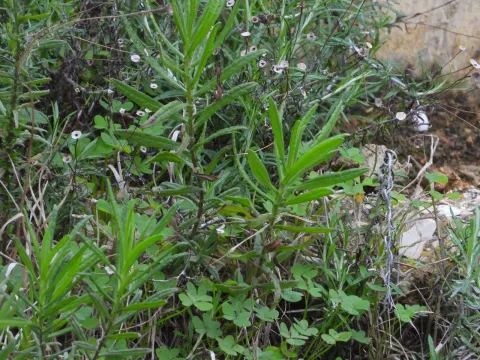
Dittrichia
Dittrichia
Dittrichia is a genus of flowering plants in the daisy family, Asteraceae. Native to the Mediterranean region, these plants are known for their resilience and ability to thrive in challenging environments where other vegetation often struggles.
What the section contains

Dittrichia
The plant prefers full sun exposure, which is essential for its robust development and high production of aromatic compounds. It is highly drought-tolerant, making it a characteristic species of arid and semi-arid Mediterranean landscapes.
Soil requirements for Dittrichia are relatively low; it can grow in rocky, sandy, or even saline soils. Its deep taproot system allows it to access groundwater, ensuring survival during intense summer heat and prolonged dry spells.
From an agricultural standpoint, Dittrichia is often viewed as an invasive species in non-native areas. Proper management requires understanding its growth cycle to prevent it from outcompeting desirable crops on grazing lands or fallow fields.
Biological studies of the genus emphasize its phytochemical potential, as it contains various secondary metabolites that are of interest for pharmacological and industrial applications, though field control remains the primary focus.
Dittrichia is susceptible to specific soil-borne fungal pathogens when planted in heavy or waterlogged soils. Excess moisture can lead to root rot, significantly weakening the plant and inhibiting its growth potential.
While pests are generally uncommon due to the presence of bitter resins, aphids can occasionally attack young growth during periods of moisture stress. These pests can transmit viral diseases that stunt the plant's development.
Effective management against overgrowth involves timely mechanical removal before seed set. Because the seeds are easily dispersed by wind, preventing their maturation is the most critical step in controlling its expansion.
Chemical control utilizing broad-spectrum herbicides is feasible but should be managed carefully to avoid harming surrounding ecosystems. Selective application methods are preferred to minimize impact on native flora.
Preventative agronomic measures, such as maintaining healthy competition from other plant species, can effectively suppress the establishment of Dittrichia. Keeping pastures well-managed reduces the likelihood of colonization.