
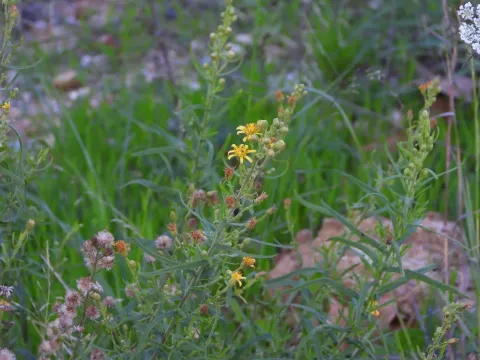
Dittrichia viscosa
Dittrichia viscosa
Dittrichia viscosa is typically propagated via seeds, which are sown directly into the soil during autumn or early spring to leverage natural temperature fluctuations for germination. Providing a well-prepared seedbed is essential for achieving high seedling establishment rates.
What the section contains
Dittrichia viscosa
The seeds should be sown shallowly, at a depth of 1–2 centimeters, and covered with a light layer of soil. Consistent moisture is required until the plants reach the four-leaf stage to ensure they establish a robust root system capable of independent growth.
For commercial cultivation, row spacing should be maintained between 50 to 70 centimeters to allow for efficient weeding and light penetration. Thinning may be necessary in dense stands to prevent competition between individual plants during the early development phase.
During the first year, young plants are sensitive to weed competition. Integrated weed management, including mechanical cultivation, is vital during this period to ensure the crop gains the dominance it naturally maintains in later years.
The crop is highly resilient once established, and sowing is usually a one-time investment for a multi-year production cycle, as the plant acts as a hardy perennial shrub.
Belonging to the Asteraceae family, Dittrichia viscosa is a perennial subshrub native to the Mediterranean region. It thrives in various environments, including disturbed sites, rocky slopes, and abandoned agricultural land, reflecting its extreme environmental hardiness.
The plant prefers well-drained, alkaline or neutral soils. It is remarkably tolerant of low-nutrient soil conditions and shows significant potential for growth in areas where traditional nitrogen-demanding crops might fail.
Climatic requirements favor a warm, Mediterranean-type climate with dry summers. While the plant can withstand short frosts, it performs best in regions where winter temperatures remain above freezing, allowing for consistent growth.
Botanically, it is identified by its lanceolate, glandular leaves that secrete a sticky, aromatic substance. This resinous coating serves as a defense mechanism against water loss, making it highly drought-resistant and suitable for xeriscaping or dry-land farming.
The deep, woody taproot system allows it to access groundwater in depths that most herbaceous crops cannot reach. This biological adaptation ensures survival through severe heatwaves without the need for additional irrigation.
The yield of Dittrichia viscosa is primarily focused on the aerial biomass containing secondary metabolites such as essential oils and flavonoids. Harvesting usually begins in the second year of growth, with the plant reaching its peak production capacity from year three onwards.
Farmers can expect a consistent supply of harvestable material for several years without the need for replanting. The biomass can be processed to extract active compounds used in botanical insecticides and herbal medicine.
Average biomass production varies by soil quality, but the crop can produce several tons per hectare annually. Yield stability is high due to the plant’s natural resistance to pests and climatic extremes that often damage other susceptible species.
The economic viability of this crop is linked to the growing demand for natural, eco-friendly agricultural inputs. By utilizing the resin-rich leaves for organic pesticide formulations, farmers add significant value to the raw crop output.
Optimization of yield is achieved through strategic pruning and timing the harvest just before the peak flowering period, which maximizes the concentration of volatile compounds in the glandular foliage.
Disease pressure is generally low for Dittrichia viscosa. However, in poorly ventilated fields or during excessively humid seasons, powdery mildew may manifest on the foliage, necessitating proper spacing to ensure adequate airflow.
Pest attacks are minimized by the plant's natural resin, which acts as a physical and chemical deterrent to most insects. Occasionally, aphids may infest new growth, but they rarely threaten the survival of mature, well-established stands.
Root rot represents the primary agricultural threat, typically caused by waterlogged soils or inadequate drainage. Preventing stagnant water is the most critical management practice for maintaining long-term plant health.
Weed management is a concern only in the initial stage. Once the plants reach a height of 30 centimeters, they effectively outcompete most invasive species due to their dense foliage and root dominance.
- Ensure proper soil drainage to avoid root hypoxia.
- Monitor for fungal infections during rainy spring seasons.
- Maintain adequate plant spacing to facilitate air circulation.
The harvest period occurs at the height of the flowering stage when the concentration of essential oils and terpenoids is at its highest. Harvesting during the late summer months ensures the best quality of dry material.
The aerial parts are harvested by cutting the stems roughly 15 centimeters above the ground. This preserves the crown, allowing the plant to regenerate for subsequent growing seasons or secondary harvests later in the year.
Immediate drying is essential after harvesting. Drying should occur in well-ventilated areas away from direct sunlight at temperatures between 30 and 40 degrees Celsius to prevent the loss of delicate volatile compounds.
Root harvesting is performed during the plant's dormant phase, usually in late autumn. The roots must be cleaned, chopped into smaller pieces, and dried carefully to ensure no mold growth occurs during storage.
Final storage requires moisture-proof containers in cool, dark environments. When stored correctly, the dried raw material maintains its medicinal and chemical potency for up to 24 months.