
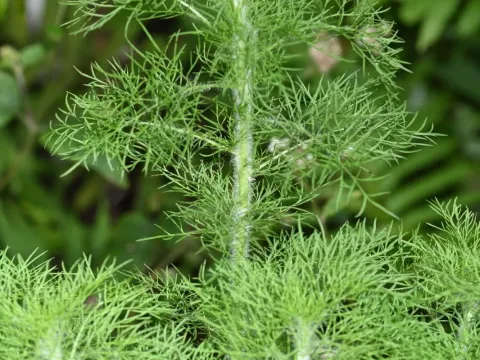
Dogfennel
Eupatorium capillifolium
Dogfennel (Eupatorium capillifolium) is a perennial herbaceous plant belonging to the Asteraceae family. It is native to the southeastern United States and is known for its distinctive feathery foliage and rapid growth rate, often reaching heights of over two meters.
What the section contains
Dogfennel
The plant reproduces primarily through seeds, which are equipped with a pappus allowing for efficient wind dispersal. This mechanism makes it a highly effective colonizer of abandoned fields, pastures, and disturbed soil environments.
Sowing in a controlled environment is best performed in early spring. The seeds are small and require minimal covering with soil, as light exposure is often beneficial for the germination process. Adequate surface moisture must be maintained during the first two weeks.
For large-scale cultivation, direct drilling into prepared seedbeds can be implemented. Maintaining a proper distance between rows is essential to ensure that each plant receives sufficient access to nutrients and light throughout the growing cycle.
Vegetative propagation is also viable by division of the root system. This method is often preferred for maintaining consistent phenotypic traits, especially when selecting for specific medicinal or aesthetic properties in agricultural plots.
Dogfennel thrives in a wide range of soil types, ranging from sandy to clay-loam, provided they are well-drained. The species shows a marked preference for acidic to neutral soils where it can establish its robust root system rapidly.
Sunlight is a critical requirement for this species. It performs best in full sun exposure, which promotes the dense, delicate foliage that gives the plant its common name. Growth in shaded areas is often stunted and results in less vigorous development.
The plant is highly adaptable to various climatic zones but is most prolific in warm, humid regions. It possesses moderate drought tolerance once established, though consistent soil moisture during the peak growing season significantly increases biomass production.
Agricultural management requires careful planning to prevent unwanted spread. Due to its aggressive nature, it is often necessary to implement buffer zones around cultivated plots to prevent the seeds from invading adjacent areas.
Nutrient requirements are relatively low, but moderate nitrogen fertilization during the spring can substantially accelerate vegetative growth. However, excessive fertilization may lead to weak, prone-to-lodging stems.
Common threats to dogfennel include fungal pathogens such as powdery mildew, which thrive in conditions with high humidity and stagnant air. These infections manifest as white powdery patches on the leaves and can reduce photosynthetic capacity.
Aphids are the most frequent insect pest, particularly targeting the tender new growth at the tips of the stems. Their feeding activity can cause the leaves to curl and stunt the overall height of the plant.
- Powdery mildew: mitigated by improving air circulation.
- Aphids: managed through systemic insecticide applications.
- Root rot: caused by excessive irrigation or poor soil drainage.
- Spider mites: common during periods of extreme heat and dryness.
- Leaf spots: typically caused by opportunistic fungal species.
Integrated pest management (IPM) is recommended for sustainable control. This includes regular field scouting, biological control agents such as ladybugs for aphids, and the removal of infected plant residues at the end of the season.
Maintaining optimal plant spacing is a primary defense against the development of foliage diseases. Reducing the canopy density helps lower the micro-humidity levels that pathogens need to proliferate.
The harvest of dogfennel is typically conducted during the flowering stage. At this point, the concentrations of essential oils and other secondary metabolites are at their peak, making it the ideal time for harvesting for medicinal purposes.
Mechanical harvesting is generally used, involving the mowing of the aerial portions of the plant. The cut should be made several centimeters above the ground to encourage regrowth if the cultivation cycle requires multiple harvests per year.
Post-harvest management involves rapid drying to prevent spoilage. The harvested material is spread in thin layers in shaded, well-ventilated sheds to preserve the integrity of the volatile organic compounds present in the foliage.
Once the biomass has reached the desired moisture content, it is ground or baled for further industrial or pharmaceutical processing. Proper storage in cool, dry conditions is essential to maintain the quality of the raw material.
If seed collection is the goal, the harvest must be timed precisely before the capsules open. The flower heads are harvested individually and stored in ventilated containers until the seeds can be threshed and cleaned.