
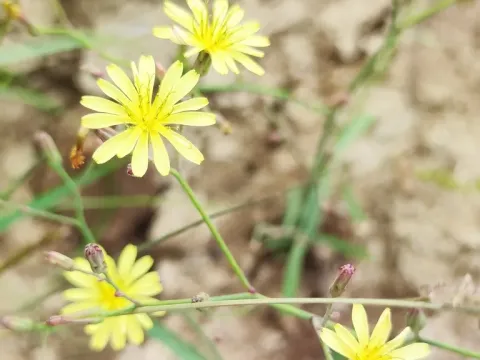
Launaea cornuta
Launaea cornuta
Launaea cornuta is a perennial herbaceous plant belonging to the Asteraceae family. It is native to tropical and subtropical regions of Africa, where it has historically been used by local populations.
What the section contains
Launaea cornuta
The plant is characterized by its ability to thrive in harsh environments, possessing a robust root system and leaves that are often adapted to retain moisture during extreme heat and dry spells.
Regarding soil requirements, it prefers well-drained sandy or loamy soils. It is highly adaptable to poor nutrient conditions and can survive in areas with low soil fertility, making it a resilient option for drylands.
Climatic requirements are centered on high sunlight availability and temperature tolerance, with the species performing best in tropical climates where seasonal rainfall cycles exist.
Cultivation practices focus on ensuring proper space for root development, which allows the plant to act as a soil stabilizer and a valuable source of green biomass in desert-adjacent regions.
The primary diseases affecting Launaea cornuta include various fungal leaf spots and mildew, which typically appear during periods of high humidity or poor air circulation.
Pest pressures are generally related to aphid infestations that target the tender shoots, potentially reducing the overall quality and quantity of the harvestable forage.
Root-knot nematodes can also be a challenge in sandy soils where the plant is cultivated intensively, requiring crop rotation strategies to minimize impact.
Management of these threats is achieved through standard agronomic practices, such as optimizing plant density and ensuring that fields remain clear of stagnant water.
As the plant is used for both animal feed and medicinal purposes, integrated pest management (IPM) is highly recommended to ensure the product remains safe for consumption.