
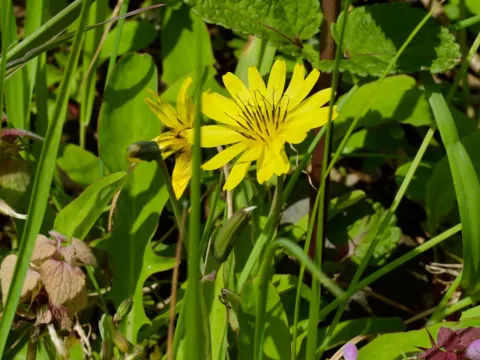
Lapsana japonica
Lapsana japonica
Sowing of Lapsana japonica, a member of the Asteraceae family, is typically performed during the spring once soil temperatures reach 10–12°C.
What the section contains
Lapsana japonica
The ideal planting window is the latter half of April or early May, which provides sufficient time for establishment before the summer heat arrives.
Seeds should be sown at a shallow depth of 1–2 centimeters, as they require light exposure to facilitate optimal germination rates.
Maintaining a row spacing of 30–40 centimeters is essential to allow adequate space for crop development and mechanical maintenance operations.
The species exhibits rapid emergence under consistent soil moisture conditions, ensuring a uniform stand if properly managed after planting.
Lapsana japonica thrives in moderately moist, fertile, loamy soils with a pH ranging from neutral to slightly acidic levels.
This crop is highly light-dependent and requires open, sunny locations that are sheltered from strong prevailing winds for optimal growth.
While the plant requires regular irrigation during the growing season, it is crucial to avoid waterlogged conditions to prevent root rot.
The application of organic matter such as well-rotted compost during soil preparation significantly improves yield and plant vigor.
A temperature range between +18°C and +24°C is optimal; exceeding these limits necessitates moisture management and mulching strategies.
The biomass yield of Lapsana japonica typically ranges from 15 to 25 tons per hectare, depending on soil quality and cultivation intensity.
Harvesting for green matter should occur before the onset of flowering to ensure the maximum concentration of nutrients and optimal foliage quality.
Consistent crop monitoring and weed control are critical factors in achieving stable yield targets throughout the entire growing season.
Technological improvements in harvesting equipment allow for higher efficiency and reduced loss of vegetable mass during large-scale operations.
Implementation of proper crop rotation patterns helps maintain soil fertility and contributes to consistently higher annual yield outcomes.
Slugs and snails pose a major threat to young seedlings, capable of destroying entire sections of the crop if left unmanaged.
High humidity levels increase the risk of powdery mildew infections, which manifest as white fungal patches on the leaf surfaces.
Pests such as aphids and spider mites frequently target the plant during drought stress, necessitating early detection and intervention.
Effective management includes regular scouting and the use of biological control agents to minimize the reliance on chemical pesticides.
Maintaining clear fields by removing invasive weeds prevents alternative hosts for pests from colonizing the immediate agricultural environment.
The harvest phase occurs when the plant is in the vegetative rosette stage, which is when the foliage quality is at its peak.
For seed production, harvesting is timed carefully as the flower heads mature, preventing excessive natural seed dispersal before collection.
Post-harvest handling must be swift, involving the removal of debris and immediate cooling to maintain the integrity of the harvested material.
Drying processes should be conducted in shaded, well-ventilated areas to prevent degradation of the plant's essential compounds and appearance.
Proper sanitation of the field after the harvest cycle helps in reducing the overwintering population of soil-borne pathogens and pests.