
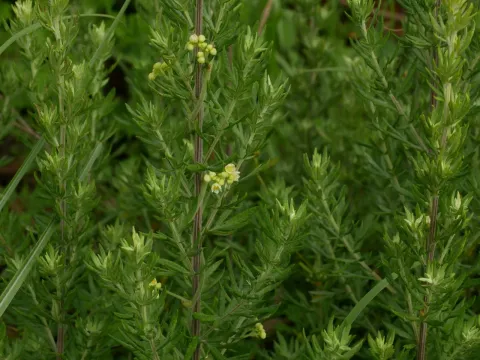
Lance-leaf mugwort
Artemisia lancea
Artemisia lancea, commonly known as lance-leaf mugwort, belongs to the Asteraceae family. This species is native to East Asia, where it thrives in natural habitats across China, Japan, and the Korean Peninsula, adapting to varied environmental conditions.
What the section contains
Lance-leaf mugwort
In terms of cultivation, the plant requires well-drained, sandy or light loamy soils. It is crucial to ensure that the site is not prone to waterlogging, as the root system of this species is highly sensitive to excessive moisture levels which can lead to decay.
This crop is highly heliophilic, meaning it demands direct sunlight to reach its full potential. Exposure to adequate sunlight is essential not only for biomass accumulation but also for the synthesis of volatile oils within the foliage, which are the plant's primary economic product.
Botanically, Artemisia lancea is distinguished by its narrow, lance-shaped leaves and erect, branched stems. The plant usually reaches a height of one meter, demonstrating a robust architecture that allows for efficient mechanical harvesting in controlled environments.
The economic value of this herb is centered on its pharmaceutical and therapeutic applications. It is recognized for its potent essential oils and phytochemicals, which are traditionally utilized in herbal medicine for their anti-inflammatory and antiseptic effects.
The primary threats to Artemisia lancea health are related to fungal pathogens such as powdery mildew, which thrive in humid and poorly ventilated conditions. Effective management requires wide spacing between rows to promote air circulation.
Insect pests, including aphids and leaf miners, can occasionally become an issue. These pests tend to concentrate on the tender tips of the branches, potentially reducing the overall quality of the harvested aerial parts.
Weed control is a vital agronomic practice during the early stages of plant development. Since the herb has a relatively slow initial growth rate, mechanical or manual weeding is necessary to prevent competition for nutrients and space.
Preventative measures are highly recommended over reactive treatments. This includes the implementation of rigorous crop rotation schemes, which disrupt the life cycles of soil-borne pathogens that might otherwise target the crop.
Harvesting strategies should also consider the potential presence of pests; it is advised to inspect the lower leaf surfaces regularly to detect infestations before they reach the economic threshold for intervention.