
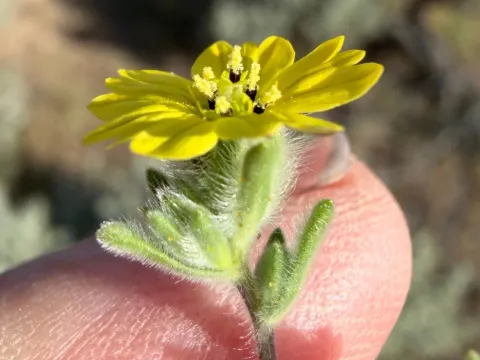
Lagophylla
Lagophylla
Lagophylla is typically sown in the spring when soil temperatures consistently reach 10–12°C. Being a warm-season plant, it is sensitive to cold soil, which can delay emergence and weaken the seedlings.
What the section contains

Lagophylla
Seeds should be planted at a depth of 2–3 centimeters. Proper soil preparation to create a fine, firm seedbed is crucial for achieving uniform emergence, especially given the relatively small size of the seeds.
The optimal seeding density is chosen to ensure early canopy closure, which helps the crop compete against invasive weeds. Rows are typically spaced up to 30 centimeters apart to facilitate mechanical weeding.
Firming the soil after sowing, using a light roller, is recommended to improve capillary moisture movement to the seeds, which is particularly beneficial in regions prone to spring droughts.
Strategic timing of the sowing phase allows the crop to maximize the use of available spring moisture, ensuring strong development before the onset of high summer temperatures.
Lagophylla thrives in well-drained, fertile loamy or sandy soils with a neutral pH. It is highly intolerant of waterlogged conditions, which can lead to root rot and stunted plant development.
The crop displays significant drought tolerance once established, making it suitable for regions with limited rainfall. However, adequate water supply during the flowering stage is essential for high yields.
Full solar exposure is a mandatory requirement for Lagophylla. Any shading during the vegetative or reproductive phases will significantly reduce oil accumulation and overall biomass production.
Balanced fertilization, particularly with an emphasis on potassium, plays a key role in supporting the plant's structural integrity and oil synthesis within the seeds.
As a member of the Asteraceae family, it is recommended to include Lagophylla in a diverse crop rotation to mitigate the risks of soil-borne diseases and to improve soil structure for subsequent crops.
The primary threats to Lagophylla are fungal diseases such as root and crown rots, which are exacerbated by high humidity and poor soil drainage during the growing season.
Insect pests, specifically aphids and plant bugs, pose a risk to the development of the flower heads. Infestations can lead to poor pollination and reduced seed filling, impacting economic output.
Effective weed management is essential during the early stages of growth. Mechanical cultivation between rows is the standard approach to prevent competition for light and nutrients.
Regular monitoring of field edges is advised, as these areas often serve as entry points for migrating pests. Integrated pest management strategies should be employed to maintain crop health.
Preventative measures, including the selection of resistant cultivars and maintaining appropriate plant spacing, are vital to minimizing the impact of potential biotic stressors throughout the season.
Harvesting should take place when the seeds reach full physiological maturity, indicated by the yellowing of the plants and the drying of the seed heads, which prevents significant harvest losses.
Maintaining a moisture content of 10–12% at the time of harvest is ideal for safe storage. Excess moisture can lead to mold development and degradation of the extracted oil quality.
Mechanical harvesting requires precise calibration of the combine harvester. Reducing drum speed and adjusting sieve openings helps to capture the small seeds without causing unnecessary damage.
Post-harvest cleaning is necessary to remove organic debris immediately. This ensures that the bulked seed does not heat up in storage, which is a common risk with oil-rich crops.
Proper drying and cool, dry storage conditions are essential for maintaining the stability of the oils produced by Lagophylla, ensuring the final product remains suitable for industrial applications.