
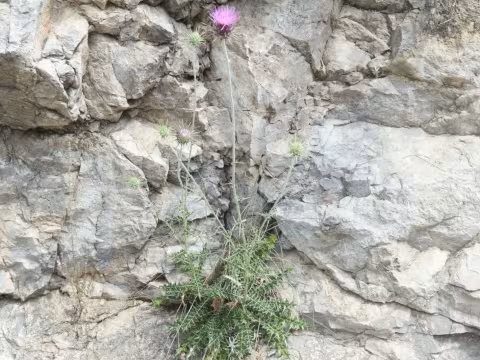
Lamyropsis
Lamyropsis
Lamyropsis is a genus of perennial herbaceous plants belonging to the Asteraceae family. Known for its thistle-like appearance, it thrives in environments that require high resilience and adaptation to harsh growing conditions.
What the section contains

Lamyropsis
The crop requires well-drained, sunny habitats to reach its full potential. It is notably drought-tolerant, making it a viable candidate for cultivation in arid regions where other common crops struggle to survive due to water scarcity.
Soil requirements for Lamyropsis center on good aeration and a neutral pH balance. It performs exceptionally well in loamy or rocky soils that prevent root saturation, which is critical for maintaining the health of its deep taproot system.
Agronomic practices for this species focus on site preparation, including deep plowing to facilitate root penetration. Proper spacing is essential to ensure that each plant has access to adequate sunlight and nutrients without intense inter-plant competition.
The geographical origin of Lamyropsis is primarily centered in the Mediterranean region. As a potential agricultural resource, it is currently being studied for its ability to withstand climatic fluctuations and maintain stable yields in low-input farming systems.
Disease management for Lamyropsis is dominated by the prevention of fungal infections, such as rust and leaf blight. These diseases are triggered by excessive moisture and poor air circulation within the plant canopy during the vegetative growth stage.
Pests, particularly aphids and various types of beetles, present a significant challenge. These insects target both the foliage and the flower buds, often compromising the reproductive success of the plant if not controlled early in the season.
Root rot is a common threat caused by poor soil drainage. When the soil remains waterlogged, the roots become susceptible to various soil-borne pathogens that can destroy the plant's vascular system, leading to rapid decline and death.
Weed competition represents a major threat, particularly for younger plants. As Lamyropsis establishes itself slowly, farmers must implement regular mechanical weeding to clear the surrounding area of invasive weeds that steal essential sunlight.
Preventative strategies include careful crop rotation and the removal of crop debris after harvest. By clearing the field of organic matter that could harbor spores or overwintering larvae, the overall health of the next growing cycle is significantly improved.