
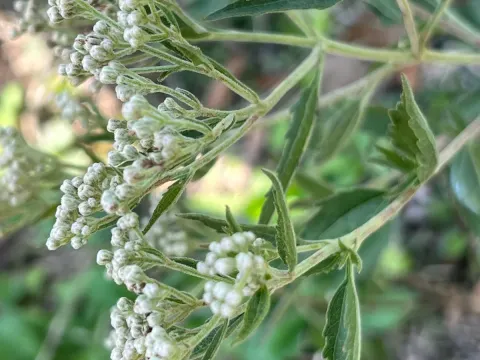
Late boneset
Eupatorium serotinum
Late boneset (Eupatorium serotinum) is a perennial herbaceous plant belonging to the Asteraceae family. Sowing is typically performed in the spring when soil temperatures stabilize between 12 and 15 degrees Celsius to ensure consistent germination rates.
What the section contains
Late boneset
For better results, seeds can be started in greenhouses during late winter to provide seedlings with an early start. Outdoor sowing requires a well-prepared seedbed with fine soil structure to support the development of the plant's delicate root system.
Vegetative propagation via root division is another common method, performed best in early spring or autumn. This technique ensures that new plants retain the genetic characteristics of the parent crop, which is advantageous for selecting high-yielding varieties.
Seed spacing should be maintained at 50–60 cm to allow for adequate airflow and nutrient uptake. Proper spacing is essential to reduce competition between plants and to facilitate easier mechanical maintenance of the crop rows.
After sowing, the seedbed should be kept moist but not waterlogged. The germination period generally lasts two to three weeks, during which the topsoil must be protected from drying out due to wind or excessive heat.
Late boneset thrives in full sun but demonstrates good tolerance to partial shade. The plant requires consistently moist soil to achieve its full growth potential, making it well-suited for low-lying areas or managed riparian zones where moisture levels remain high.
The ideal soil profile is fertile, loamy, and rich in organic matter. While it adapts to various soil textures, improved drainage is necessary to prevent root suffocation, even though the species is known for its preference for wet environments.
The climate requirements include a temperate growing season with adequate rainfall. The species is hardy and capable of surviving winter conditions, provided the root system remains protected by soil or mulch during freezing temperatures.
Fertilization should focus on organic amendments applied in early spring. These nutrients provide the necessary nitrogen and minerals to support the rapid development of stems and foliage throughout the growing cycle.
Regular monitoring of irrigation is required during dry spells. Despite its affinity for moisture, excessive reliance on manual watering can be mitigated by improving soil structure to retain water more efficiently over time.
Common threats to Eupatorium serotinum include powdery mildew and rust, which often appear during periods of high humidity and poor ventilation. These fungal diseases can significantly impair the quality of the foliage.
Pests, particularly aphids and various species of caterpillars, can cause localized damage to the leaves and apical buds. Monitoring for these pests during the vegetative phase is essential to maintain the health and vigor of the crop.
Cultural control methods, such as thinning out dense growth, are the primary defenses against fungal outbreaks. By improving air circulation, the environment becomes less hospitable to pathogenic spores that thrive in stagnant air.
If chemical interventions are necessary, integrated pest management (IPM) practices should be followed. Using selective insecticides and fungicides helps control outbreaks while minimizing negative impacts on beneficial insects like pollinators.
Preventative care also involves maintaining field hygiene by removing crop residues at the end of the season. This practice helps reduce the overwintering potential of common pests and disease pathogens in the soil.