
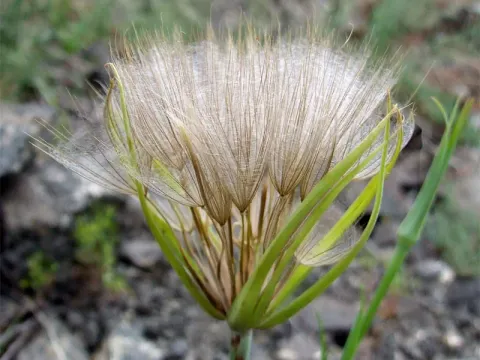
Salsify
Tragopogon coloratus
Salsify (Tragopogon coloratus) is a member of the Asteraceae family, valued as a unique root vegetable. Sowing is typically performed in early spring as soon as the soil temperatures reach 5–8 degrees Celsius.
What the section contains
Salsify
The seeds should be sown in rows spaced 30–45 cm apart to ensure proper ventilation and ease of weeding. A planting depth of 2–3 cm is ideal for robust germination of the seedlings.
Early sowing is crucial in temperate climates, as it allows the plant to develop a strong root system before the onset of high summer temperatures. Sowing in April is generally considered the best window.
In regions with milder winters, fall sowing can be considered to jump-start the early season growth. However, this requires well-drained soil to prevent waterlogging during the dormant winter months.
Ensuring proper spacing is essential for high-quality production. A density of 20–25 plants per linear meter helps prevent overcrowding and encourages the formation of large, uniform roots.
This crop thrives in deep, loose, well-drained sandy loam or loamy soils. Soils with high clay content should be avoided or amended with organic matter to prevent the roots from becoming deformed or stunted.
Salsify is a sun-loving plant that requires full exposure to thrive. While it is relatively drought-tolerant, adequate moisture throughout the growing season is necessary for the development of juicy, tender roots.
Fertilization should focus on potassium and phosphorus to support root development. Nitrogen should be applied sparingly, as an excess can lead to excessive foliage growth at the expense of the root.
The optimal temperature for growth ranges between 18 and 22 degrees Celsius. The crop is remarkably hardy and can withstand light frosts, which some gardeners believe even improves the flavor profile of the roots.
Proper soil preparation, including deep tilling, is vital. Stones and debris in the soil must be removed to prevent root bifurcation, which significantly lowers the market value of the produce.
The primary use of salsify is as a culinary root vegetable, often referred to as the oyster plant due to its unique flavor profile when cooked. It is a highly nutritious, fiber-rich ingredient.
In addition to the roots, the young leaves can be consumed as an early-season green. However, as the plant matures, the focus remains primarily on the harvest of the taproots.
Typical yields for well-managed fields can range from 20 to 30 tons per hectare, depending on local climate conditions and soil fertility management practices.
- Excellent source of inulin, beneficial for gut health.
- Versatile in soups, stews, and roasting.
- Suitable for home gardens and small-scale commercial operations.
Quality control during harvest and post-harvest handling is critical for ensuring that the roots remain fresh for consumers or storage for extended periods during the winter season.
White mold is a significant concern, particularly in fields with poor drainage or high humidity. It can cause the roots to rot rapidly, especially if wounded during harvest.
Powdery mildew can affect the foliage in warm, dry weather. Regular field monitoring and the application of appropriate, permitted fungicides help mitigate the impact of this disease.
Aphids are the most common insect pest, targeting the tender foliage during the early stages of growth. Biological control methods or soft insecticides are recommended to keep populations in check.
Wireworms can bore into the roots, causing damage that renders the product unmarketable. Proper crop rotation and deep plowing are effective strategies to reduce wireworm populations in the soil.
Maintaining a balanced ecosystem through crop rotation is the best long-term strategy for managing the health of a salsify crop and preventing the build-up of soil-borne pathogens.
The main harvest takes place in late autumn after the plants have completed their growth cycle. Cool temperatures trigger the concentration of carbohydrates in the roots, enhancing their sweet flavor.
Roots should be lifted carefully using a garden fork or mechanical lifter. Minimizing physical damage to the skin of the root is essential for preventing decay during long-term storage.
After harvesting, the foliage should be trimmed to about 1-2 cm above the root. The roots should be cleaned, inspected for damage, and placed in cool storage as soon as possible.
Ideal storage conditions involve a cool cellar or cold storage unit maintained at 0...+2 degrees Celsius with high humidity. Covering the roots with damp sand can prevent dehydration.
Properly handled, salsify roots can remain in good condition for several months throughout the winter, providing a consistent supply of this unique vegetable until the following spring.