
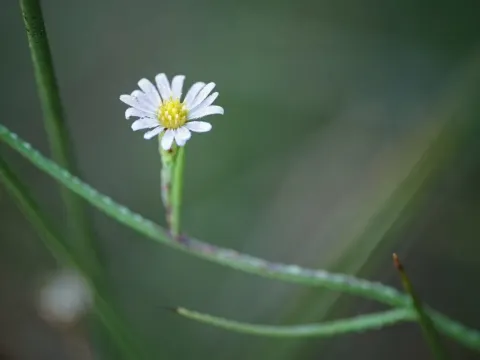
Saltmarsh aster
Symphyotrichum tenuifolium
Symphyotrichum tenuifolium, commonly known as the saltmarsh aster, is a perennial herbaceous plant belonging to the Asteraceae family. Native to the coastal regions and salt marshes of the United States, it is evolutionarily adapted to environments with high salinity levels that would be toxic to most other cultivated plants.
What the section contains
Saltmarsh aster
The plant is characterized by its slender, linear leaves and delicate, pale-colored daisy-like flower heads. Its botanical structure allows it to thrive in saline marshlands where environmental stress is high and competition from other flora is relatively limited.
Cultivation requirements necessitate high light exposure for optimal development. As a sun-loving plant, it performs best in open areas with consistent solar radiation, which facilitates the rapid maturation of its stems and enhances its overall resilience during the growing season.
Soil management for this species is unique because it tolerates heavy moisture and saline content. It prefers well-structured substrates that can retain water but also allow for some movement, replicating the natural tidal inundation cycles found in its native geographical range.
In terms of agricultural and horticultural use, this species is valuable for restoring saline-impacted lands and for ornamental plantings in coastal gardens. Maintenance is minimal, provided that the essential requirements for moisture and sun are consistently met throughout the year.