
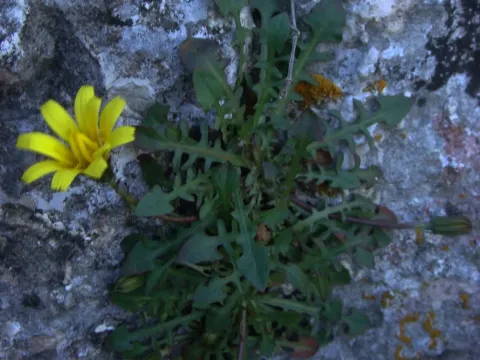
Hypochaeris robertia
Hypochaeris robertia
Hypochaeris robertia is a perennial herbaceous plant belonging to the Asteraceae family. In agricultural terms, it is considered a specialized crop adapted to harsh mountain environments where conventional forage crops often fail to establish.
What the section contains
Hypochaeris robertia
Originating from the Mediterranean region, specifically the islands of Corsica and Sardinia, this plant is naturally suited to rocky and thin soils. Its native habitat allows it to thrive in nutrient-poor conditions while providing consistent biomass cover.
Botanically, the plant features a robust basal rosette of leaves and a deep-reaching root system. This morphology enables the plant to survive extended drought conditions and stabilizes the soil surface against erosion in sloped terrains.
The climate requirements of Hypochaeris robertia focus on cool-to-temperate growing seasons with significant solar exposure. It is highly resistant to temperature fluctuations, making it ideal for alpine and sub-alpine meadow development.
In terms of agricultural utility, the crop is primarily used for pasture improvement. It offers a unique forage profile for livestock, particularly goats and sheep, in high-altitude grazing areas where plant diversity is a key factor for animal health.
Common plant diseases include fungal pathogens that develop during periods of high humidity and poor aeration within the canopy. Managing plant spacing is critical to reducing the incidence of these foliar diseases.
Pests such as aphids and leaf-eating beetles can cause significant damage to the biomass of the crop during the spring growing season. Integrated pest management strategies are advised to minimize population outbreaks.
Seed-feeding insects pose a major threat to seed production, potentially reducing the ability of the crop to regenerate naturally in the field. Field inspection during the flowering phase is essential for monitoring.
Root rot remains a concern if the soil is poorly drained or if the field is situated in a basin where water accumulates. Proper site selection and land grading are essential agronomic precautions.
Weed competition is most problematic during the establishment phase. Since the plant is slow-growing initially, mechanical weeding in the early stages is necessary to ensure the crop successfully dominates the plot.