
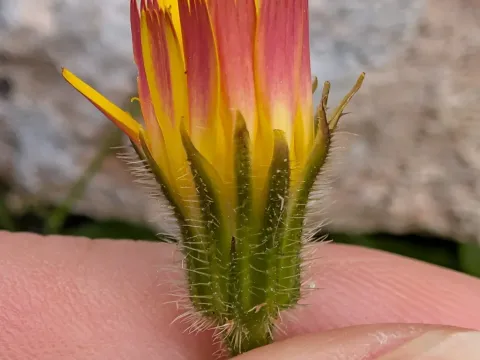
Hypochaeris achyrophorus
Hypochaeris achyrophorus
Hypochaeris achyrophorus is an annual herbaceous plant belonging to the Asteraceae family. Its cultivation requires careful attention to soil moisture levels during the early spring germination phase.
What the section contains
Hypochaeris achyrophorus
The ideal sowing window is early spring when the soil temperature rises above 8-10 degrees Celsius. Providing a warm, stable seedbed ensures uniform emergence and establishment of the seedlings.
Seeds should be sown at a shallow depth of 1-2 centimeters, as they are small and possess limited energy for emergence from deeper layers. Precision seeding equipment helps in maintaining optimal planting density.
Post-sowing soil compaction is a standard agronomic practice to improve capillary water movement to the seeds. This step is vital in preventing surface drying during critical emergence days.
The plant exhibits rapid initial growth, which helps in establishing a strong root system. Proper weed control in the initial stages is essential for maximizing crop performance.
Originating from the Mediterranean basin, this species thrives in climates with mild winters and dry, sunny springs. It is well-adapted to open areas with high solar radiation.
The plant prefers well-drained, sandy, or light loam soils with a neutral pH. Excessive moisture or waterlogged conditions significantly hinder growth and can cause root decay.
Agronomic requirements include moderate fertilization levels, focusing on balanced nutrient availability. Excessive nitrogen can lead to excessive biomass growth at the expense of root stability.
Hypochaeris achyrophorus demonstrates remarkable drought tolerance, making it suitable for regions with limited rainfall. It withstands occasional heat stress without significant yield loss.
Integrating this crop into existing pasture rotations is common practice. It interacts well with other forage species, providing a balanced nutritional profile for livestock.
Harvesting for forage purposes is best conducted at the full flowering stage. During this period, the plant biomass contains the highest concentration of essential nutrients and digestible fibers.
For seed production, harvest timing must be carefully monitored to capture the crop before seed shattering occurs. Harvesting in dry conditions minimizes post-harvest losses.
Mechanical harvesting techniques typically involve direct mowing followed by swath drying. This ensures the material reaches an appropriate moisture level before storage.
When used in grazing systems, rotational grazing strategies are recommended to maintain plant vigor. This approach allows the plant enough recovery time after being grazed or mowed.
Proper storage conditions, including a dry and well-ventilated environment, are necessary to prevent spoilage and mold growth. This ensures that the harvested quality is maintained throughout the storage period.