
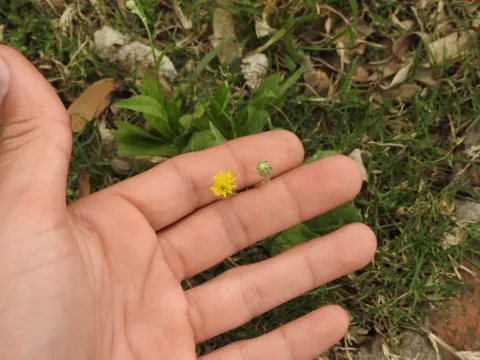
Hypochaeris microcephala
Hypochaeris microcephala
Hypochaeris microcephala is a perennial herbaceous plant belonging to the Asteraceae family. In agricultural contexts, it is primarily identified as a weed that colonizes meadows, pastures, and disturbed land areas throughout its range.
What the section contains
Hypochaeris microcephala
The plant exhibits high ecological plasticity, allowing it to thrive in diverse soil conditions, ranging from heavy clays to lighter sandy loams. It prefers areas with consistent moisture availability but maintains robustness against seasonal drought fluctuations.
Originally native to South America, the species has naturalized in various regions globally. Its ability to colonize open habitats allows it to compete effectively with native perennial grasses and legumes used for forage production.
Botanically, it is recognized by its basal rosette of leaves and slender stems topped with small flower heads. The reproduction strategy relies on wind-dispersed seeds, which feature specialized pappus structures that ensure efficient propagation across agricultural landscapes.
In terms of agricultural utility, Hypochaeris microcephala is considered a negative factor in pasture management. Because it often invades high-quality forage stands, it is typically targeted for eradication or management to preserve the nutritional density of grazing lands.
The primary threat posed by this plant is its aggressive reproductive strategy and ability to outcompete desired pasture species for sunlight and nutrients. Unchecked growth can lead to significant biomass reduction in target forage crops.
Various insect pests, such as aphids and specialized coleopterans, utilize this plant as a host. These insects can subsequently migrate to adjacent crops, increasing the pressure on agricultural producers to implement pest control measures.
Fungal pathogens, including powdery mildew and rust species, frequently infest the foliage of Hypochaeris microcephala. These pathogens can compromise the health of the plant while acting as a persistent source of infection for surrounding vegetation.
Management strategies involve both chemical interventions and mechanical practices. Systemic herbicides are often deployed to control infestations, while frequent mowing before seed set is a widely recommended cultural practice to limit population expansion.
Sustainable control requires integrated management approaches, including strict monitoring of field borders and the use of clean, weed-free seeds. By reducing the seed bank in the soil, farmers can effectively maintain the productivity and quality of their pastures.