
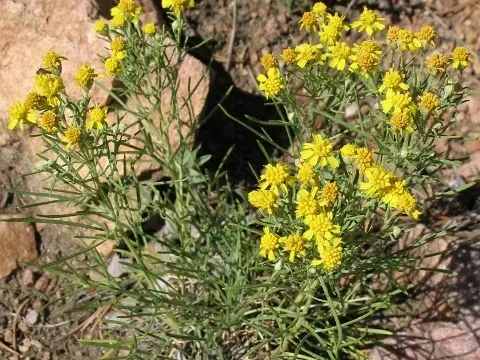
Hymenoxys richardsoni
Hymenoxys richardsoni
Hymenoxys richardsoni, commonly known in its native range as Colorado rubberweed, is a perennial herbaceous plant belonging to the Asteraceae family. It is indigenous to the western regions of North America, where it thrives in rugged, arid landscapes and open prairies.
What the section contains
Hymenoxys richardsoni
The plant features a stout taproot system and grows in compact, branching clumps typically reaching heights of 10 to 30 centimeters. Its foliage consists of narrow, thread-like leaves that are well-adapted to reduce moisture loss in hot, dry environments.
Successful cultivation requires soil that provides excellent drainage, such as sandy or gravelly loam with a neutral to slightly alkaline pH. The species is highly intolerant of waterlogged conditions, which can lead to rapid root rot and systemic plant failure.
In terms of climatic adaptation, this plant excels in areas with high solar radiation and low annual precipitation. It is a drought-tolerant perennial that requires full sun exposure to maintain its structural integrity and prevent stunted, weak growth.
While the plant is sometimes appreciated for its resilience and yellow flowering display, it is strictly noted for its toxicity to livestock. Farmers and land managers must be aware that ingestion by sheep and cattle can cause significant health complications due to its chemical composition.
The most significant threat to the health of Hymenoxys richardsoni is the development of fungal pathogens, particularly root and crown rots caused by excessive soil moisture. Maintaining a dry root zone through proper drainage is the most effective preventative measure.
Various insect pests, including leaf-feeding larvae and sap-sucking insects, may occasionally infest the plants. Management should involve integrated pest control strategies, prioritizing non-chemical interventions to protect local pollinator populations.
Because the plant is considered a toxic weed in many grazing contexts, it poses a direct economic threat to livestock production. Controlling its spread in pastures is critical, often requiring selective herbicide application or manual removal where populations are small.
Virus transmission by insect vectors like aphids can be a concern for nursery-grown plants. Ensuring adequate spacing between plants and keeping the surrounding environment clear of debris and host weeds helps mitigate the spread of such infections.
Agricultural monitoring programs should focus on identifying signs of environmental stress, which often precede pest or disease outbreaks. Early detection allows for the implementation of cultural practices that enhance the plant's natural resistance to local threats.