
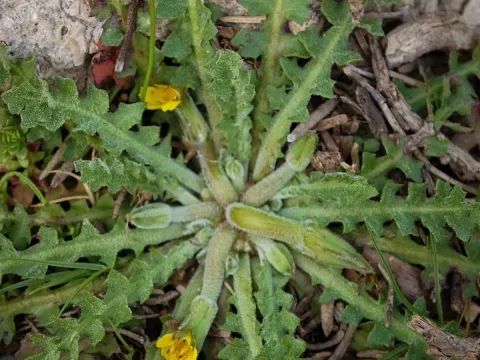
Hyoseris
Hyoseris
Hyoseris belongs to the Asteraceae family and is an interesting herbaceous plant often found in Mediterranean environments. While it is not a widely commercialized industrial crop, it possesses characteristics that make it suitable for niche agricultural use.
What the section contains


Hyoseris
Sowing typically occurs in the autumn months to take advantage of natural moisture levels. In milder climates, spring sowing is also an option, provided that the soil temperature has reached a level conducive to germination.
The seeds should be sown at a shallow depth of approximately 1 to 2 centimeters. Because the seeds are small, precise placement is necessary to ensure consistent emergence across the field.
Maintaining proper row spacing, generally around 30 centimeters, is crucial for plant development. This spacing allows the rosette of leaves to grow effectively without excessive competition for nutrients or sunlight.
When starting a new field, it is recommended to conduct a soil test to ensure the pH and nutrient levels are appropriate. Adequate seedbed preparation is the foundation for a healthy crop of Hyoseris.
Hyoseris thrives in well-drained, sandy to loamy soils. It has a high tolerance for poor soil conditions but prefers a neutral or slightly alkaline pH to maximize its growth potential.
The plant is adapted to Mediterranean climates, meaning it can tolerate periods of drought once established. However, for commercial purposes where leaf yield is the goal, supplemental irrigation is necessary.
Excessive humidity or waterlogged soil is highly detrimental to the crop. Growers must ensure the site has excellent drainage to prevent root rot and other moisture-related pathologies.
Exposure to full sunlight is essential. While the plant can tolerate partial shade, its leaf production and general vigor are significantly reduced compared to plants grown in full sun conditions.
Temperature management is straightforward, as the plant is hardy. However, protection from extreme frost or excessive summer heat is advised to maintain consistent harvest cycles throughout the year.
Yield estimation for Hyoseris is primarily based on the accumulation of leaf biomass. By managing the plants to encourage vegetative growth rather than reproductive development, farmers can maximize output.
The first harvest can typically take place a few months after sowing. By cutting the leaves at the base of the rosette, the plant is encouraged to regenerate, allowing for multiple harvests within a single season.
Productivity is significantly linked to the frequency of water and nutrient application. Nitrogen-based fertilizers can boost growth, though they should be used sparingly to avoid making the plant soft and susceptible to disease.
In experimental settings, Hyoseris has shown potential as a reliable green forage source. Its ability to regrow after cutting makes it a candidate for sustainable agricultural models in suitable regions.
To ensure high quality, the harvest must be timed before the appearance of flower stalks. Once the plant enters the reproductive phase, the leaves lose their tenderness and nutritional quality.
Fungal diseases such as powdery mildew are common threats, especially in areas with poor ventilation or high relative humidity. Maintaining clean, open rows helps reduce the risk of these infections.
Pests like aphids and spider mites can damage the leaves by extracting plant sap. Early detection and the use of integrated pest management are critical for maintaining healthy populations.
Slugs and snails can be highly destructive, particularly during wet seasons or in newly established plantings. Physical barriers or eco-friendly baits can be used to protect the young rosettes.
Soil-borne pathogens can also affect the roots, particularly if the crop is not rotated correctly. Avoiding the monocropping of Asteraceae species helps break the disease cycle.
Proper field hygiene, including the removal of dead plant material at the end of the season, significantly contributes to the overall reduction of threat pressure for the following year.
Harvesting Hyoseris is generally performed by cutting the leaves near the ground. Manual harvesting is common for small plots, while specialized machinery can be used on larger farms.
The timing of the harvest is critical; early morning is the preferred time to minimize evaporation and ensure the leaves are harvested at peak crispness and quality.
Post-harvest handling should involve rapid cooling to preserve the freshness of the leaves. Hyoseris is perishable and must be treated as a high-quality fresh product if intended for human consumption.
For seed production, the plant is left to bolt. Once the seed heads mature and turn brown, they are harvested and dried to prepare for the next season's sowing.
Logistics for transport should be carefully planned to prevent bruising or wilting of the delicate leaves, ensuring the product reaches the destination in optimal condition.