
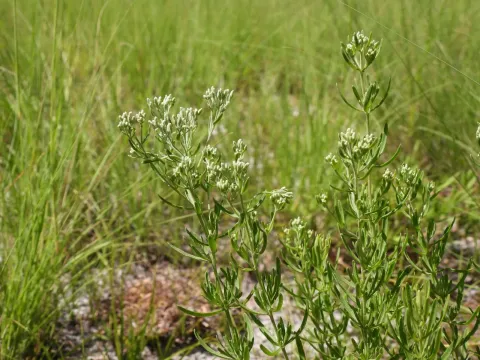
Hyssop-leaved thoroughwort
Eupatorium hyssopifolium
Sowing of Eupatorium hyssopifolium is best performed in early spring, once the soil has sufficiently warmed up and the risk of frost has passed.
What the section contains
Hyssop-leaved thoroughwort
Seeds are known for their dormancy, and a period of cold stratification for several weeks significantly enhances germination rates under nursery conditions.
The seeds should be surface-sown or covered with a very light layer of soil to ensure they receive sufficient light to trigger the sprouting process.
Greenhouse propagation in plug trays is a common commercial practice to ensure uniform seedling quality before transferring the plants to field plots.
Proper spacing is crucial; plants should be set roughly 40 to 50 centimeters apart to prevent overcrowding and allow for healthy foliage development.
Hyssop-leaved thoroughwort is a robust perennial member of the Asteraceae family, originating primarily from the eastern regions of North America.
The plant thrives in full sun but exhibits a remarkable degree of flexibility, successfully adapting to light shade without significant loss in productivity.
It prefers moist, nutrient-rich soils with a slightly acidic to neutral pH, though it can tolerate a variety of soil textures given consistent moisture levels.
Effective agronomic management includes regular mulching to suppress competing weeds and maintain the soil moisture balance during the peak growing months.
The species is well-regarded for its adaptability to different climate conditions, making it a reliable crop choice in temperate agricultural systems.
Like many perennials, this plant is subject to standard horticultural threats, particularly when grown in conditions with poor air circulation or high humidity.
Powdery mildew is the most frequently encountered disease, often appearing as a white film on the leaves when environmental conditions become overly humid.
Pests such as aphids may occasionally cluster on the tender tips of the plant, potentially weakening the stem and reducing the overall vitality of the crop.
Integrated pest management strategies are recommended, focusing on maintaining plant health and removing localized outbreaks before they become widespread.
Cultural practices such as adequate spacing and balanced nitrogen fertilization are primary defenses against most common plant stressors and pathogens.