
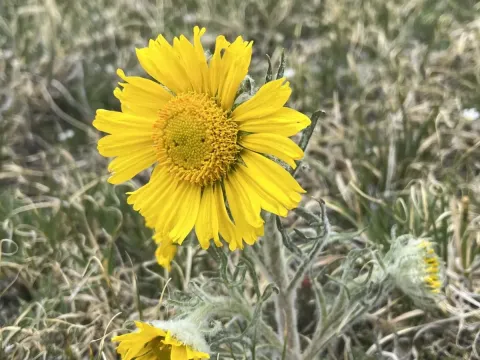
Hymenoxys grandiflora
Hymenoxys grandiflora
Hymenoxys grandiflora, commonly known as the old man of the mountain, is a perennial flowering plant in the family Asteraceae. Native to the alpine regions of North America, this species is uniquely adapted to high-altitude environments characterized by rocky soils and sparse vegetation.
What the section contains
Hymenoxys grandiflora
Botanically, the plant is distinguished by its dense, woolly foliage and large, vibrant yellow flower heads that bloom during the short summer season. Its growth habit is low-profile, allowing it to withstand high winds and heavy snow loads typically found in mountainous terrain.
Cultivation requirements necessitate well-drained, gritty soil that mimics the mineral-rich alpine slopes. It is essential to avoid soil compaction and poor drainage, as the species is highly susceptible to root decay if kept in constantly moist or waterlogged conditions.
The plant thrives in full sun and requires exposure to cool, clean air. It is not suitable for hot, humid climates, as the plant demands significant diurnal temperature shifts to maintain its metabolic processes and avoid premature dormancy.
Its primary agricultural and horticultural utility is within the niche of ornamental rock gardening. Landscape designers value it for its resilience and ability to provide bright, persistent color in demanding alpine-style landscapes where other garden plants struggle to survive.
Root rot caused by fungal pathogens is the primary threat to Hymenoxys grandiflora in garden settings. This is almost exclusively linked to over-irrigation or heavy, non-porous soil types that prevent rapid moisture evaporation.
Insects such as mites or aphids may occasionally colonize the foliage during stress periods. Maintaining optimal spacing and ensuring excellent airflow around the plant canopy serves as the most effective prophylactic measure against both fungal and insect outbreaks.