
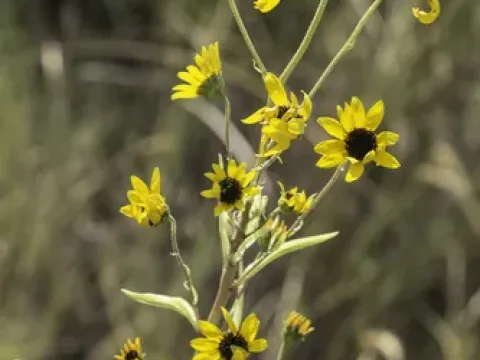
Paradox sunflower
Helianthus paradoxus
The paradox sunflower is a fascinating member of the Asteraceae family, recognized primarily for its remarkable ability to thrive in salt-stressed environments. Unlike common sunflowers, this plant is a true halophyte, specialized for growth in saline wetlands.
What the section contains
Paradox sunflower
Native to the southwestern United States, specifically the desert wetlands of New Mexico and West Texas, the plant is adapted to soils with high mineral content. It survives in ecological niches that are hostile to almost all other vegetation.
The plant employs complex physiological strategies to maintain osmotic balance. By accumulating salts in specific plant tissues and effectively managing water intake, it avoids the dehydration and toxicity issues typically caused by saline groundwaters.
Botanically, it is a tall, perennial species that can grow over two meters in height. Its yellow, composite flowers bloom in late summer, and the foliage displays an adaptation to high-salinity habitats through specific leaf structures that minimize water loss.
In terms of agricultural significance, the paradox sunflower is invaluable as a source of salt-tolerance genes. Breeders are studying its genome to incorporate these beneficial traits into commercial sunflower varieties, potentially opening up vast tracts of saline land for future production.
Habitat loss represents the most critical threat to the survival of the paradox sunflower. The draining of wetlands for agricultural expansion or urban development has fragmented the populations of this rare plant species significantly.
While the plant has evolved to handle extreme soil conditions, it is sensitive to drastic changes in the hydrological cycle. Any reduction in the water table, even if the salinity remains high, can cause rapid decline in the plant's health and reproductive capacity.
Insects such as leaf miners or seed-eating weevils can cause localized damage, but the plant's chemical profile, influenced by salt uptake, generally serves as a natural deterrent against many generalist pests found in agricultural settings.
Pathogenic threats are rarely reported for wild populations, but greenhouse cultivation attempts have shown susceptibility to fungal diseases such as Verticillium wilt if soil moisture levels are poorly managed during the early growth stages.
Conservation efforts are currently focused on protecting existing wetlands and preserving seed samples in specialized germplasm repositories to ensure the species' future against the ongoing challenges of environmental degradation.